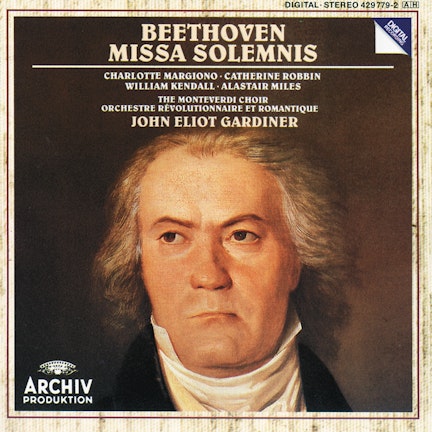
Beethoven composed his monumental Missa Solemnis to mark the occasion of his patron, Archduke Rudolph, being appointed Archbishop and Cardinal in 1819.
Composer's Artistic Vision
Beethoven regarded the Missa Solemnis as the summit of his artistic achievements, a work of enormous proportions and emotional contrasts.
Compositional Technique
The Missa Solemnis is conceived as a whole and has been described as a five-movement symphony, despite its potential liturgical use.
Recording & Production
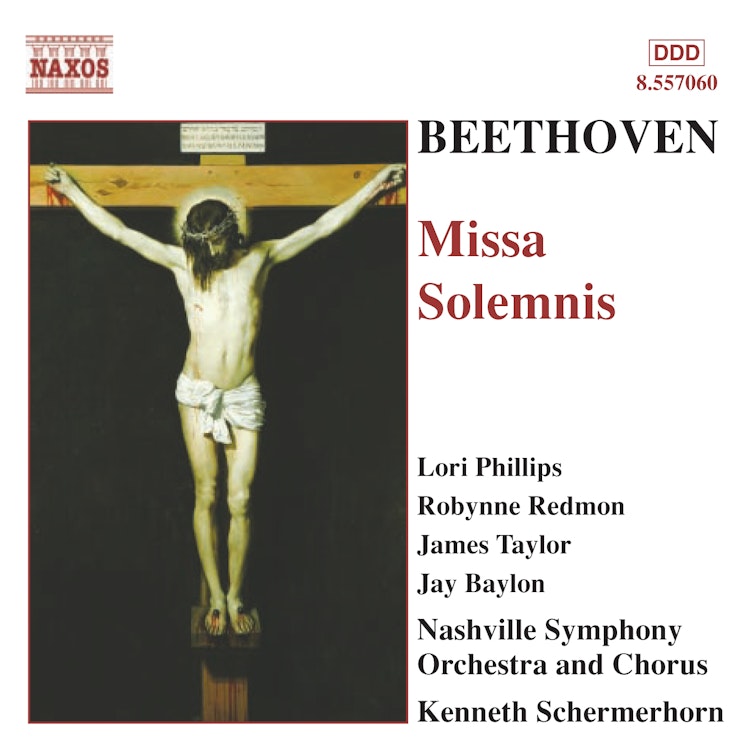
This recording of Beethoven's Missa Solemnis was made at Ingram Hall, Blair School of Music, Vanderbilt University, Nashville, in April 2003.
Composer Biography
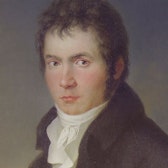
Beethoven left his native city of Bonn in 1792 to establish himself in Vienna, where he quickly became known as a keyboard virtuoso.
Composer Biography
Beethoven's increasing deafness, which became evident around the turn of the century, contributed to his reputation as a social eccentric.
Composer's Artistic Vision
The final petition of the Agnus Dei in the Missa Solemnis, 'Prayer for inner and outward peace,' is seen by some as a reflection of Beethoven's own inner turmoil.
You might also enjoy...
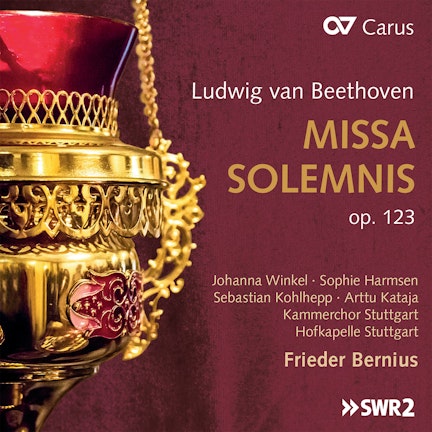
Beethoven: Missa solemnis, Op. 123
Beethoven: Missa Solemnis
Mozart: Mass in C Minor, K. 427 "Great"
Cherubini: Messa Solenne
Mozart: Mass in C Minor, K. 427 "Great" (Reconstr. H. Eder) [Live]
Mozart: Mass in C minor
Mozart: Mass in C Minor, K. 427 "Great" (Reconstr. C. Kemme)