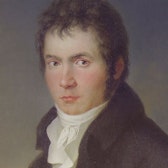
Beethoven, who was often ill throughout his life, suffered from a severe bout of influenza and jaundice during the composition of the Missa solemnis, which weakened him for almost a year.
Compositional Technique
In the 'Dona nobis pacem' section of the Agnus Dei, Beethoven incorporates 'battle music' with timpani and trumpets, reflecting his personal experiences with war and his longing for peace.
Composition History
Beethoven's Missa solemnis was originally planned as a festive mass for the consecration of his patron Archduke Rudolph as Archbishop of Olomouc on March 9, 1820.
Composer's Artistic Vision
Beethoven considered the Missa solemnis his most important work, even more so than his Ninth Symphony, stating in a letter to his former pupil Ferdinand Ries: 'My greatest work is a big mass that I have recently composed.'
Composer's Artistic Vision
Beethoven intended the Missa solemnis to 'awaken and consolidate religious feelings' among both singers and listeners, and even planned to publish it with a German translation for wider dissemination, including among the poor.
Compositional Technique
The 'Et incarnatus' section of the Credo was intended by Beethoven to be sung by the entire tenor section of the choir, not a solo tenor, to represent the Christian community's profession of faith.
Performer Biography
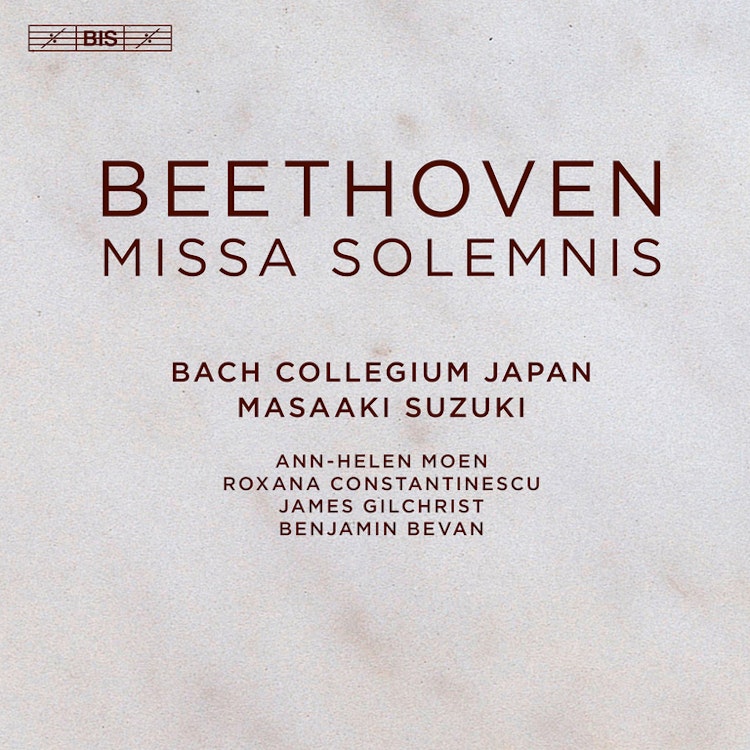
Masaaki Suzuki, the conductor, founded the Bach Collegium Japan in 1990 to introduce Japanese audiences to period instrument performances of Baroque works.
You might also enjoy...
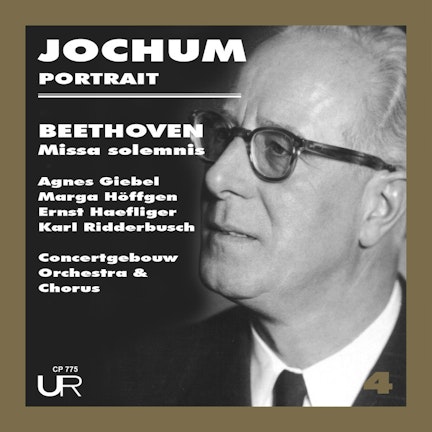
Jochum conducts Missa Solemnis
Beethoven, L. Van: Missa Solemnis
Beethoven: Missa Solemnis
Schubert: The Great Masses
Cherubini: Messa Solenne
Beethoven: Missa Solemnis
Schubert: Messe No. 6 en mi bémol majeur, D. 950
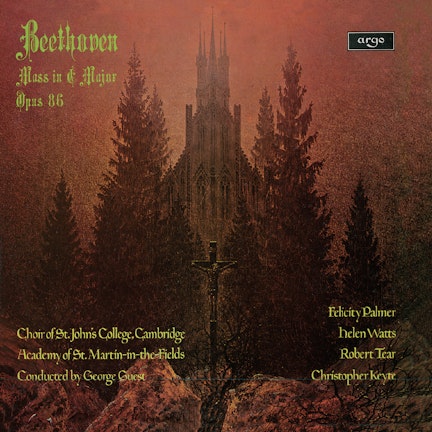
Beethoven: Mass in C
Schubert: Mass No. 6 in E-Flat Major, D. 950
Schubert: Mass No. 2 in G Major, D. 167 & Mass No. 6 in E-Flat Major, D. 950