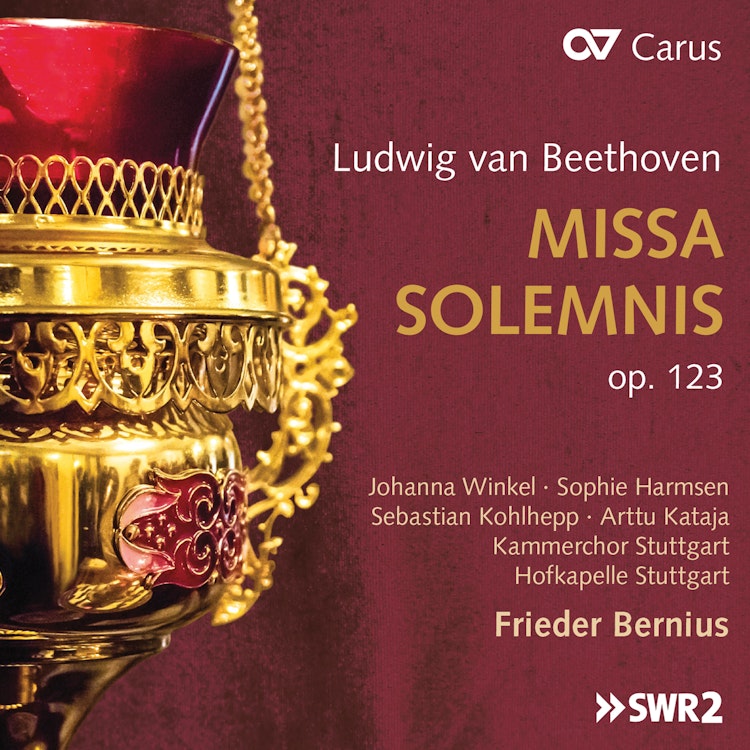
In the 'Dona nobis pacem' section of the Agnus Dei, Beethoven included two passages of war-like music, complete with trumpets and timpani, reflecting his personal experiences during the Napoleonic Wars.
Compositional Technique
The beginning of the Kyrie in Missa solemnis intentionally echoes Mozart's The Magic Flute, which Beethoven admired, to set a solemn, 'Sarastro-like' atmosphere.
Performer Biography
Frieder Bernius, the conductor, is known for his distinctive sound, curiosity for new scores, and questioning of interpretative traditions, and has founded several ensembles including the Kammerchor Stuttgart and Hofkapelle Stuttgart.
Composition History
Beethoven's Missa solemnis was originally planned as a festive mass for the enthronement of his patron Archduke Rudolph as Archbishop of Olmütz on March 9, 1820.
Composer's Artistic Vision
Beethoven considered the Missa solemnis to be his most important and significant work, even more so than his Ninth Symphony.
Composer Biography
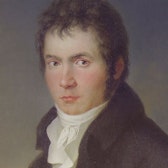
In his later years, Beethoven increasingly turned to religion due to his total deafness, seeking comfort in it.
Composer's Artistic Vision
Beethoven's primary goal in composing the Missa solemnis was to awaken and sustain religious feelings in both the singers and the listeners.
You might also enjoy...
Gounod: Messe solennelle de Sainte Cécile
Beethoven: Mass in D Major, Op. 123 "Missa solemnis"
Dvorák: Mass in D Major, Op. 86
Gounod: St. Cecilia Mass / Bizet: Te Deum
Beethoven: Missa solemnis, Op. 123 (Live)
Rossini: Stabat Mater
Anton Bruckner: Mass No. 2 (1882 version) / Te Deum [1884 version] [Berlin Radio Chorus and Symphony Orchestra, Rogner]
Rossini: Stabat Mater
Bruckner: Mass No. 1 in D Minor
Beethoven: Missa solemnis, Op. 123
Beethoven: Mass in D Major, Op. 123 "Missa Solemnis"
Suppe: Requiem
Bruckner: Messe F-moll
Cherubini: Mass No. 2 in D Minor, "Messe Solennelle"