This recording was made in December 2011 at Teldex Studio Berlin, with Martin Sauer as artistic director and editor, and Martin Litauer as sound engineer.
Composer's Artistic Vision
Beethoven, though never explicitly titling a work 'perpetual motion', deeply explored the concept's potential, which challenged traditional compositional paths.
Compositional Technique
Basing a composition entirely on the reiteration of a single rhythmic value, as in a moto perpetuo, challenges traditional European instrumental music's reliance on spoken language and declamation.
Performer Biography
Javier Perianes, the pianist on this recording, is a highly acclaimed Spanish artist who has performed at venues like Carnegie Hall, Amsterdam Concertgebouw, and the Tchaikovsky Conservatory.
Composer Biography
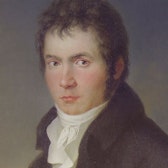
For Beethoven, the piano was his primary field of experimentation and study, where he explored radical reconsiderations of traditional rhetoric.
Album & Artwork
The album title, 'Moto perpetuo', refers to a musical term for a work composed of notes of the same duration following each other rapidly, simulating ceaseless movement.
Historical Context
The concept of perpetual motion in music became a reflection of the profound changes in 18th-century European cultural life, particularly the mechanicity associated with industrialization.