Beethoven: Piano Concerto No. 3, Piano Sonatas 24 & 28
9/26/2025, 9 Tracks, 1:09:35
Featuring
Karim Said
Domingo Hindoyan
Royal Liverpool Philharmonic Orchestra
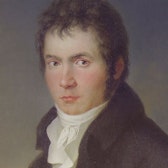
Ludwig van Beethoven
Did you know?
1/7
Instruments
Beethoven received an instrument in 1796 from Matthäus Andreas Stein and his sister, Maria Anna 'Nanette' Stein, who later founded her own firm, Streicher.
Critical Reception
The premiere of Beethoven's Piano Concerto No. 3 in April 1803 received a lukewarm critical response, with one reviewer noting it was 'not completely to the audience's satisfaction'.
Instruments
The pianos of Matthäus Andreas Stein and Nanette Streicher used the 'Viennese action' invented by their father, Johann Andreas Stein, allowing for fine gradations of touch.
Composition History
Beethoven's Piano Concerto No. 3 in C minor, Op. 37, was likely sketched in late summer 1802, shortly before he wrote his Heiligenstadt Testament, a confession of despair over his worsening hearing.
Composer's Artistic Vision
Beethoven was generally more concerned with expression than keyboard range in his early piano sonatas, though his later works explored the full compass of Viennese pianos.
Composer Biography
Beethoven's knowledge of the robust playing style of London-based composers like Muzio Clementi, Jan Ladislav Dussek, and Johann Baptist Cramer influenced the evolution of his piano works.
Instruments
By the time Beethoven arrived in Vienna in 1792, five-octave fortepianos were common, with some already exceeding that range.
You might also enjoy...
Beethoven : Piano Concerto No.4 & Piano Sonates Nos 30 & 31
Beethoven - Concerto N°4, Sonates Op.13§109
Beethoven: Piano Concerto No. 5/ Piano Sonatas Nos. 8 & 23