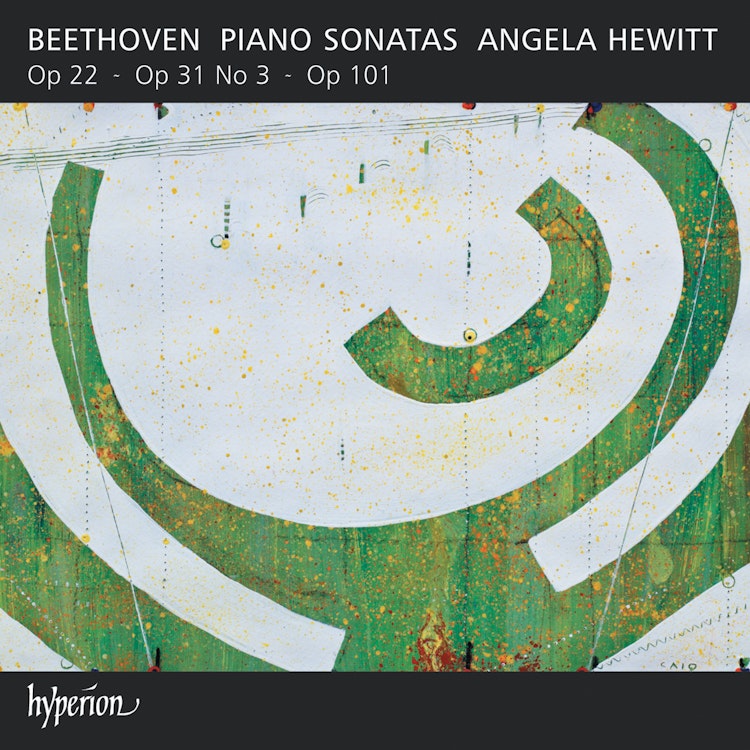
Beethoven: Piano Sonatas, Op. 22, Op. 31/3 & Op. 101
1/12/2024, 12 Tracks, 1:12:28
Featuring
Angela Hewitt
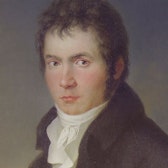
Ludwig van Beethoven
Did you know?
1/7
Composition History
Beethoven was particularly pleased with his Piano Sonata in B flat major, Op 22, writing to his publisher in 1800 that it was 'really something' and predicting its commercial success.
Composer Biography
Beethoven's hearing was progressively worsening in 1816, the year he completed the Piano Sonata in A major, Op 101, though he didn't start using conversation books until 1818.
Instruments
In the finale of the Piano Sonata in A major, Op 101, Beethoven used the 'contra E' note for the first time ever, a note only available on the latest pianos of his time.
Performer Biography
Angela Hewitt, the pianist on this recording, won First Prize in the 1985 Toronto International Bach Piano Competition, which launched her international career.
Composer Biography
Beethoven dedicated his Piano Sonata in A major, Op 101, to his favorite female pianist and pupil, Dorothea von Ertmann, whom he admired for her artistic talent and person.
Album & Artwork
The pianist, Angela Hewitt, intentionally goes against the usual trend of pairing related works on this album, preferring to present it as a 'recital'.
Critical Reception
When sending his Piano Sonata in A major, Op 101, to his publisher, Beethoven suggested it be titled 'The difficult-to-play Sonata in A', stating that 'What is difficult is also beautiful, good, great etc.'
You might also enjoy...
Beethoven: Piano Sonatas Nos. 11, 24 and 29
Beethoven: Piano Sonatas Nos. 12, 21, 24, 26
Beethoven: Sonatas Opp.7, 14 & 22
Beethoven Piano Sonatas
Beethoven: Piano Sonata No. 1 in F Minor, Op. 2 No. 1
Beethoven: Piano Sonata No. 3 in C Major, Op. 2 No. 3 & Piano Sonata No. 23 in F Minor, Op. 57 "Appassionata"
Beethoven, L. Van: Piano Sonatas Nos. 4, 9, 10, 12
Beethoven: Piano Sonata No. 28 in A Major, Op. 101: I. Etwas lebhaft und mit der innigsten Empfindung. Allegro ma non troppo
Beethoven: Piano Sonata in E Major, Op. 109: I. Vivace, ma non troppo
Beethoven: Piano Sonata No. 6 in F Major, Op. 10 No. 2
Mordecai Shehori Plays Ludwig van Beethoven, Vol. 4
Beethoven: Piano Sonatas Nos. 17 “The Tempest”, 20, 27 & 31
Beethoven: Piano Sonatas Nos.28 & 29
Beethoven: Piano Sonata No. 15, Op. 28 "Pastoral" & Symphony No. 6, Op. 68 "Pastoral" (Arr. P. Kim for Piano)