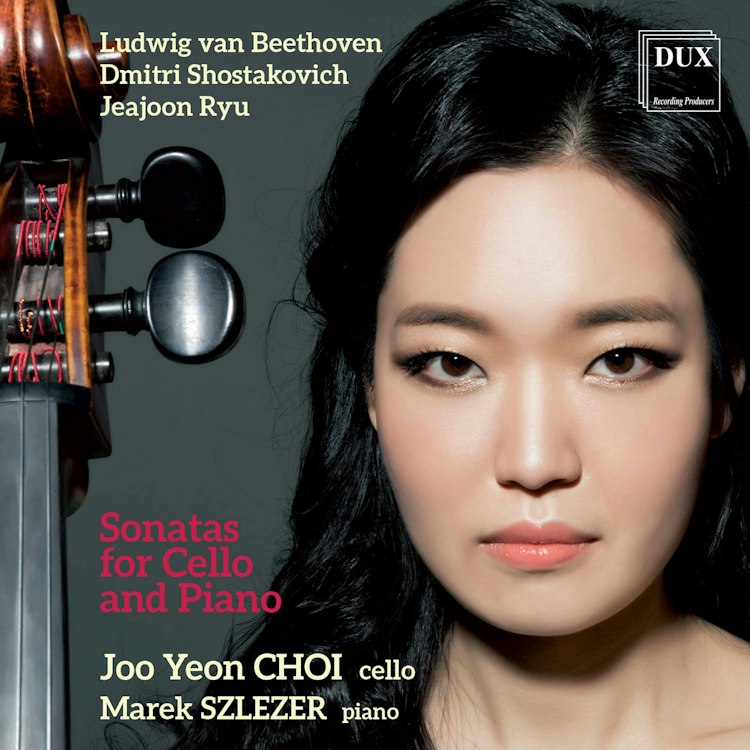
Beethoven, Shostakovich & Ryu: Sonatas for Cello & Piano
7/7/2017, 10 Tracks, 1:02:24
Featuring
Joo Yeon Choi
Marek Szlezer
Ludwig van Beethoven
Dmitri Shostakovich
Jeajoon Ryu
Did you know?
1/7
Composer's Artistic Vision
In his Cello Sonata, Shostakovich turned to Beethoven's musical tradition and Classical-Romantic heritage, moving away from avant-garde solutions like extreme atonality and complicated rhythms.
Composition History
Beethoven himself called his Cello Sonata in C major No. 4, Op. 102 No. 1 a 'Freie Sonate' (Free Sonata) due to its unconventional two-movement structure.
Compositional Technique
Dmitri Shostakovich's Cello Sonata features deeply lyrical movements contrasted with elemental and vivid scherzo and rondo movements, with wild rhythms in the second movement suggesting a 'crazy dance' inspired by Jewish music.
Composer Biography
Ludwig van Beethoven's five sonatas for piano and cello were a breakthrough in the genre's musical development, transforming the cello's role from accompaniment to an equal partner.
Composer Biography
South Korean composer Jeajoon Ryu, born in 1970, has strong ties to European tradition, having studied in Cracow with Krzysztof Penderecki in addition to his training in Seoul.
Historical Context
Dmitri Shostakovich composed his Cello Sonata in D minor, Op. 40 in 1934, a time when innovation in art was viewed unfavorably in Soviet Russia.
Recording & Production
This album was recorded at the European Center Matecznik 'Mazowsze' in Otrębusy, Poland, from December 1st to 3rd, 2014.