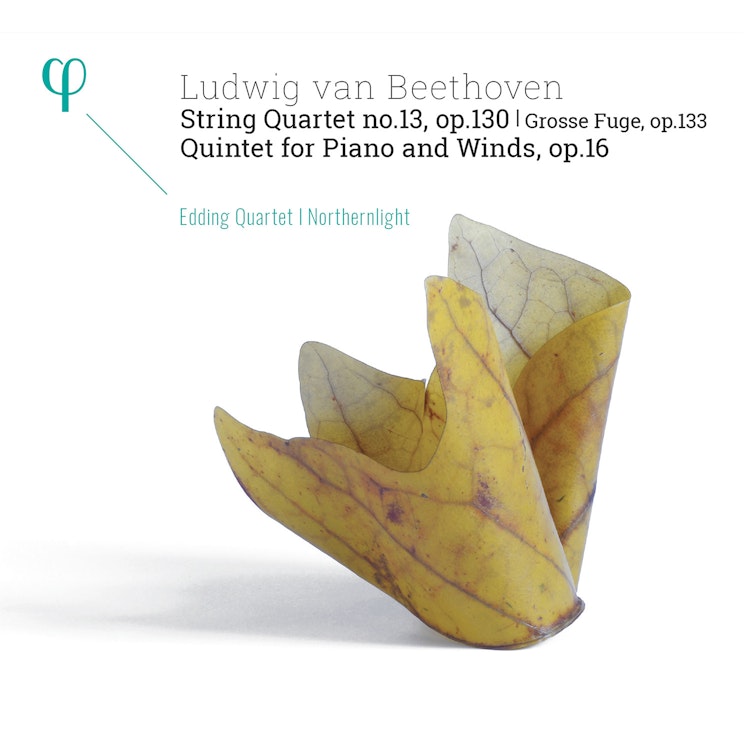
Beethoven: String Quartet No. 13, Op. 130 (Grosse fuge, Op. 133) & Quintet for Piano and Winds, Op. 16
9/23/2016, 9 Tracks, 1:15:17
Featuring
Baptiste Lopez
Caroline Bayet
Pablo de Pedro
Ageet Zweistra
Maude Gratton
Nicola Boud
Marcel Ponseele
Julien Debordes
Nicolas Chedmail
Edding Quartet
Northernlight ensemble
Ludwig van Beethoven
Did you know?
1/7
Composer Biography
When Beethoven composed the Quintet for Piano and Winds, op.16, at age 26, he was primarily known as a successful pianist who had moved to Vienna to further his musical development.
Composition History
The Grosse Fuge, op.133, was originally the final movement of Beethoven's String Quartet, op.130, but was released as a stand-alone piece after its premiere caused 'bafflement and despair'.
Compositional Technique
The Grosse Fuge, op.133, is unprecedented in its gargantuan scale of over 700 bars, its uncompromising idiom, and its complex architecture that layers multiple formal motifs and techniques.
Composition History
The two works on this album, Beethoven's Quintet for Piano and Winds, op.16, and String Quartet in B-flat Major, op.130, represent his early and late compositional periods.
Compositional Technique
Beethoven's Quintet for Piano and Winds, op.16, shares many similarities with Mozart's Quintet for Piano and Winds, KV 452, including scoring, tonality, and formal architecture.
Interpretation
The Edding Quartet and Northernlight ensemble perform on historical instruments, including gut strings and lighter bows, to achieve a more 'spoken' articulation and differentiated sound palette.
Compositional Technique
The String Quartet in B-flat Major, op.130, unusually features six movements instead of the traditional four, allowing Beethoven to explore specific compositional ideas in each.