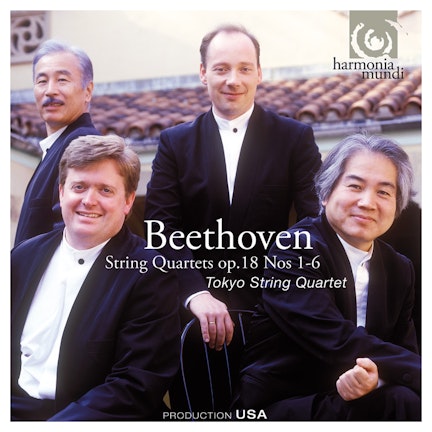
The Op. 18 quartets were commissioned by Prince Franz Joseph Maximilian Lobkowitz, a great music-lover who played violin and cello, maintained his own orchestra, and regularly organized concerts.
Compositional Technique
The slow movement of Quartet No. 1 in F major is programmatically linked to the tomb scene from Shakespeare's Romeo and Juliet, with Beethoven's sketches including phrases like 'despair / he kills himself'.
Historical Context
In the late 18th century, the string quartet genre was booming in Vienna, with hundreds of works published and countless private performances, though public quartet concerts did not yet exist.
Compositional Technique
The finale of Quartet No. 6, titled 'La Malinconia' (Melancholy), explores the sudden mood changes associated with melancholia, interrupting the Allegretto with Adagio sections to suggest renewed depression.
Composition History
Beethoven began composing his Op. 18 string quartets in 1798, surprisingly late in his career, after having already written numerous other chamber works.
Composition History
Beethoven fundamentally revised three of the Op. 18 quartets during their composition, including radical changes to the slow movement of No. 2, transforming its meter and thematic material.
Composer's Artistic Vision
Beethoven studied significant quartets by Mozart and Haydn as models for his Op. 18, with the fifth quartet closely modeling Mozart's K464 in its movement sequence and character.
You might also enjoy...
Beethoven: String Quartets Nos. 12 & 16
Beethoven: String Quartets, Op. 18, Nos. 5 and 6
Beethoven: The Early String Quartets
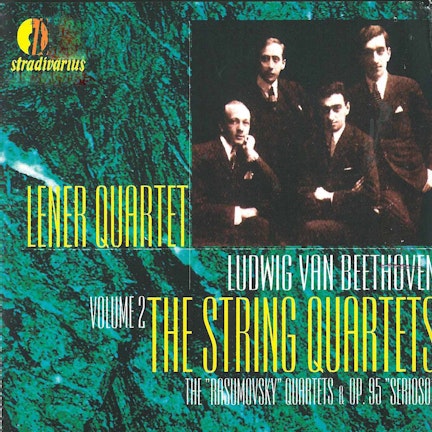
Beethoven: The String Quartets, Vol. 2
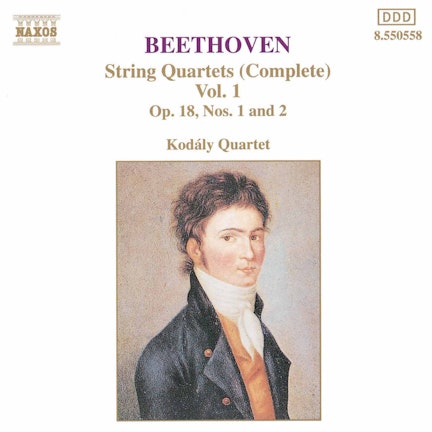
Beethoven: String Quartets Op. 18, Nos. 1 and 2
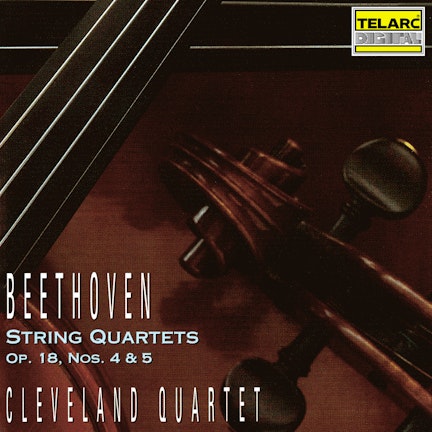
Beethoven: String Quartets, Op. 18 Nos. 4 & 5
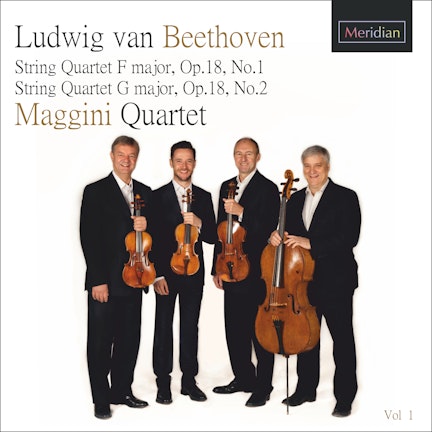
Beethoven Quartets Op. 18, 1 & 2
Beethoven: String Quartet in D Major, Op. 18 No. 3; String Quartet in C Minor, Op. 18 No. 4
Beethoven: String Quartet No. 10 in E-Flat Major, Op. 74 "Harp" & String Quartet No. 11 in F Minor, Op. 95 "Quartetto serioso"