Despite its initial premiere being a 'disaster', the reputation of Beethoven's Symphony No. 5 grew rapidly, with its power and simplicity becoming widely acknowledged.
Notable Performances
The premiere of Beethoven's Symphonies No. 5 and No. 6, along with other works, took place in an unheated theater in Vienna in 1808, lasting over four hours and was considered a 'disaster' due to the length and the orchestra's poor performance.
Performer Biography
Kazimierz Kord, the conductor on this album, was the youngest musician in the world to become the Director and conductor of an Opera House in 1962, at the Cracow Musical Theatre.
Composition History
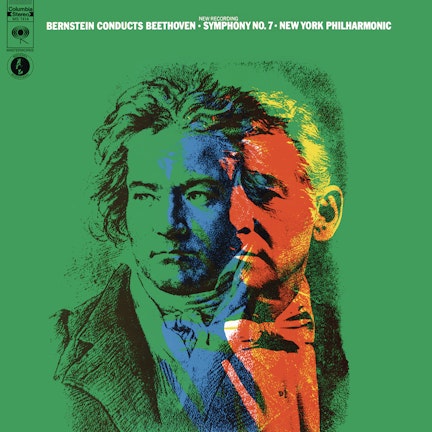
Beethoven's Symphony No. 7 was fortunate to be premiered alongside 'Wellington's Victory', a propaganda piece commissioned by Mälzel, the inventor of the metronome, which guaranteed a successful concert.
Composition History
Beethoven worked on his Symphony No. 5 for four years, from 1804 to 1808, during which time he also composed several other major works, including Symphony No. 4 and Symphony No. 6 'Pastoral'.
Compositional Technique
Beethoven's Symphony No. 5 is a prime example of 'motivic elaboration', built on a single, powerful motif that gives the work its expressive force.
Compositional Technique
The strength of Beethoven's Symphony No. 7 lies in its rhythm, with each movement assigned a distinct, expressive rhythm that is consistently maintained.