Beethoven's Violin Sonata No. 9, Op. 47, known as the Kreutzer Sonata, was composed in a very short time for the violinist George Polgreen Bridgetower, who had requested a work for one of his concerts in Vienna.
Composition History
Beethoven's Violin Sonata No. 10, Op. 96, was written almost ten years after the Kreutzer Sonata and marked the beginning of his late period, helping him recover from a severe depression.
Composition History
Beethoven tailored the finale of his Violin Sonata No. 10, Op. 96, to the playing style of French virtuoso Jacques Pierre Joseph Rode, even though he found it somewhat troubling to accommodate Rode's preference for less rapid passages.
Historical Context
The autograph of the first movement of Beethoven's Violin Sonata No. 9, Op. 47, contains the dedication "Sonata mulattica Composta per il Mulatto Brischdauer / gran pazzo e compositore mulattico" in reference to the violinist George Polgreen Bridgetower's Afro-Caribbean origins.
Critical Reception
The Kreutzer Sonata was considered groundbreaking, surpassing previous works in the genre in terms of dimensions, technical difficulty, and compositional complexity, and was initially met with some incomprehension by Beethoven's contemporaries.
Instruments
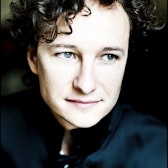
The Chris Maene Straight Strung Concert Grand Piano, used by Martin Helmchen on this recording, was commissioned by Daniel Barenboim to combine the rich sound of historical pianos with the volume and clarity of modern concert grands.
Composition History
Despite being premiered by George Polgreen Bridgetower, Beethoven's Violin Sonata No. 9, Op. 47, became known as the Kreutzer Sonata after Rodolphe Kreutzer, to whom Beethoven rededicated it following a quarrel with Bridgetower.