The Sonata in A Minor, Op. 23, was originally published with the Spring Sonata, Op. 24, but they were separated due to a pragmatic printing error where their violin parts were in different formats.
Critical Reception
Rodolphe Kreutzer, the French violinist to whom Beethoven's Kreutzer Sonata was dedicated, rejected the work as 'outrageously unintelligible' and never performed it.
Composition History
The Kreutzer Sonata, Op. 47, was initially dedicated to George Augustus Polgreen Bridgetower, a brilliant mulatto violinist, but the dedication was changed to Rodolphe Kreutzer after a falling out over a lady.
Compositional Technique
Beethoven's violin sonatas, following Mozart's lead, consistently treat the piano and violin as equal partners in a dialogic exchange, culminating in the 'concerto without orchestra' style of the Kreutzer Sonata.
Compositional Technique
The Kreutzer Sonata, Op. 47, significantly expanded the dimensions of a violin sonata, featuring lengthy movements (599 bars in the first, 539 in the last) and demanding technical requirements, making it suitable for the concert hall rather than intimate chamber music.
Interpretation
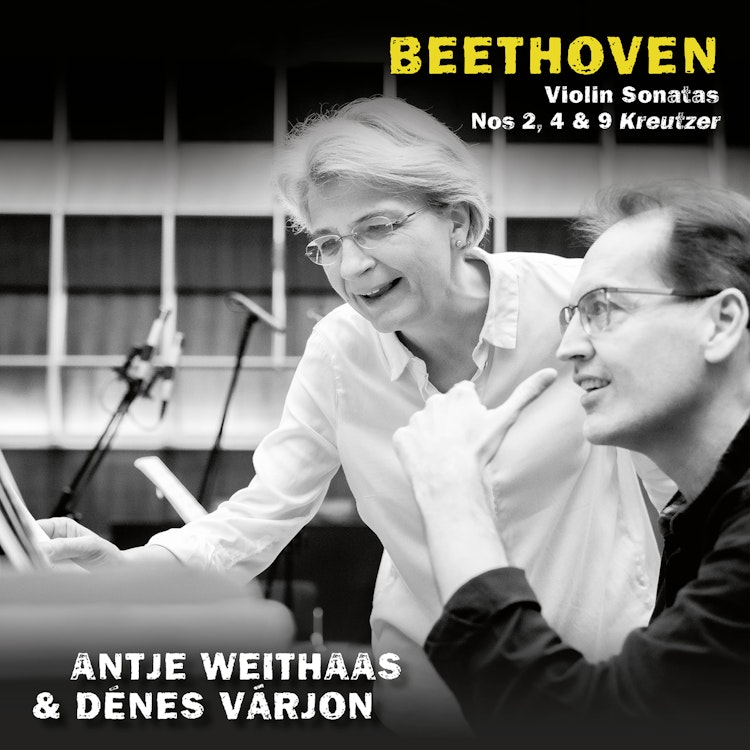
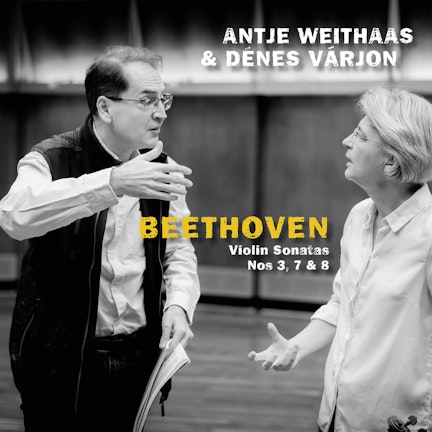
The performers on this album, Antje Weithaas (violin) and Dénes Várjon (piano), chose a non-chronological order for the sonatas to highlight the contrast and Beethoven's compositional evolution.
Critical Reception
Beethoven's early violin sonatas, Op. 12, were met with perplexity and harsh criticism by the Allgemeine Musikalische Zeitung in 1799, which described them as 'an affront to accustomed harmonic progression'.