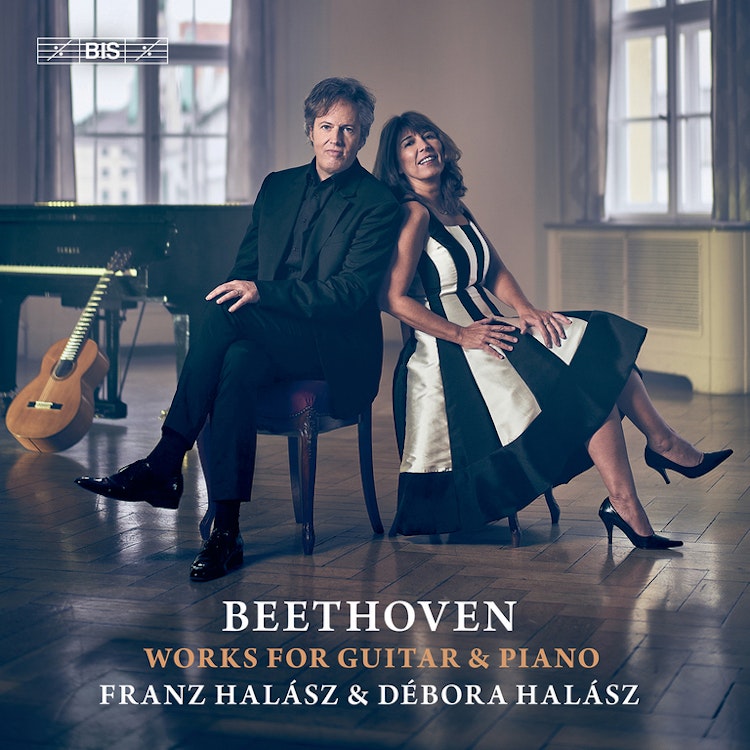
The guitar was a popular instrument in Vienna during Beethoven’s career, but the composer wrote little for the instrument himself. But guitar and piano duo Franz and Débora Halázs compensate for this with an album of arrangements. Alongside Beethoven’s four works for mandolin and piano, they perform several early compositions for flute or violin and piano, as well as Beethoven’s contemporary Ferdinando Carulli’s 1825 arrangement of a set of variations.
Featuring
Franz Halász
Débora Halász
Ludwig van Beethoven
Did you know?
1/7
Composition History
Many of Beethoven's early works, including most on this album, were omitted from his official catalogue and were only brought to light by the 1955 WoO (Werke ohne Opuszahl) catalogue.
Interpretation
Débora Halász, the pianist, made necessary adaptations for most pieces on this album, ensuring they did not alter the composer's intentions, except for one piece adapted by Ferdinando Carulli.
Composer Biography
Beethoven wrote four pieces for mandolin and piano in 1796 while traveling to Prague, dedicating them to Joséphine de Clary, but never composed for the instrument again.
Performer Biography
Franz Halász, the guitarist on this album, received a Latin Grammy Award in 2015 for 'Alma Brasileira' with his duo partner Débora Halász.
Composition History
The Serenade for flute and piano, Op. 41, is a transcription of an earlier Serenade for flute, violin, and viola, Op. 25, and exemplifies Beethoven's work for the popular home music market.
Composer's Artistic Vision
Beethoven himself declared that his aesthetics would take new directions from the moment his Symphony No. 3, 'Eroica', premiered in 1805.
Composition History
Beethoven's Five Pieces for Mechanical Clock were likely composed for Count Joseph Deym, who collected mechanical instruments, and their notation was similar to Mozart's Fantasy for Flötenuhr.
You might also enjoy...
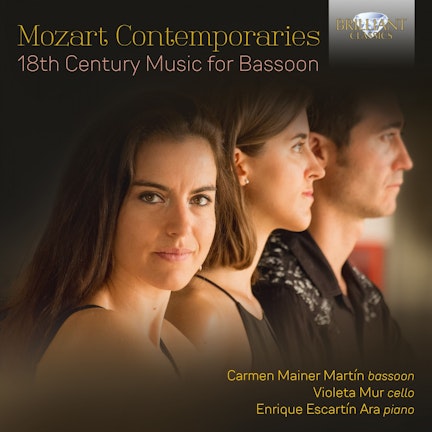
Mozart Contemporaries: 18th Century Music for Bassoon
s'Zwitscherl: Music for 2 Clarinets & Piano
Encores
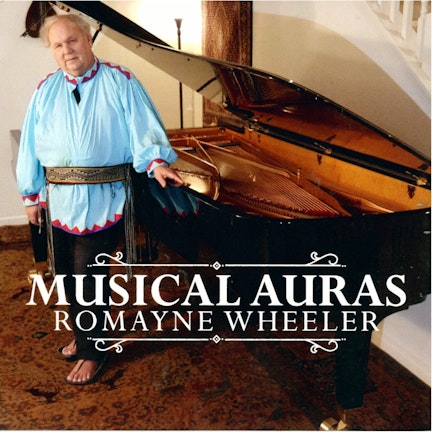
Musical Auras
Liebestraum
Russian Medieval Chant
J.S. Bach: The Lute Suites
Where My Sun Rises
I Lift My Lamp
B.A.C.H.
French & German Crossroads (Live)
Miracle
Johann Sebastian Bach: The Seven Toccatas, Bach on Clavichord, Vol 2