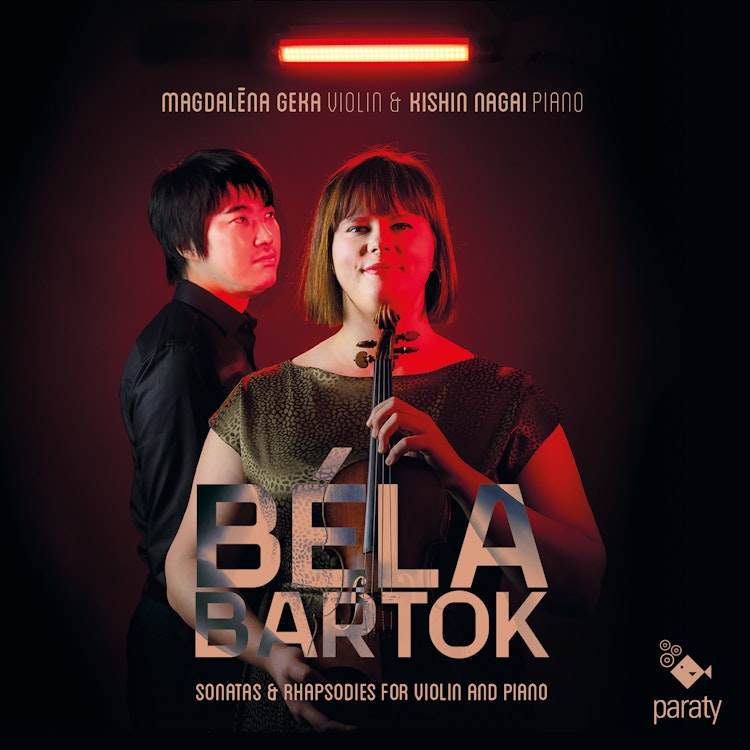
Béla Bartók: Sonatas & Rhapsodies for Violin and Piano
12/9/2022, 9 Tracks, 1:15:20
Featuring
Magdalēna Geka
Kishin Nagai
Béla Bartók
Did you know?
1/7
Historical Context
Bartók's ethnomusicological research, which involved collecting folk songs across various lands, was criticized by nationalists who accused him of 'treason to the fatherland'.
Composition History
Bartók's Violin Concerto no. 1 and String Quartet no. 1 were inspired by his affair with young violinist Stefi Geyer.
Compositional Technique
Bartók's First Sonata for Violin and Piano, though almost atonal, subtly edges towards the key of C sharp minor and features a piano part of extreme difficulty.
Composer's Artistic Vision
In his Rhapsodies, Bartók aimed to reproduce the sounds of amateur violinists he heard in the Hungarian and Romanian countryside, incorporating their unique playing styles.
Composer Biography
Béla Bartók's early interest in the violin led him to compose several works for his classmates, though many are now lost or unpublished.
Instruments
Magdalēna Geka, the violinist on this recording, plays an Alessandro Gagliano violin from 1734, generously loaned by the Anima Music Foundation.
Compositional Technique
The Second Sonata for Violin and Piano uses a two-movement structure that mirrors the Lassú/Friss scheme of the Verbunkos, a Hungarian dance with slow, improvised, and lively, exultant parts.
You might also enjoy...
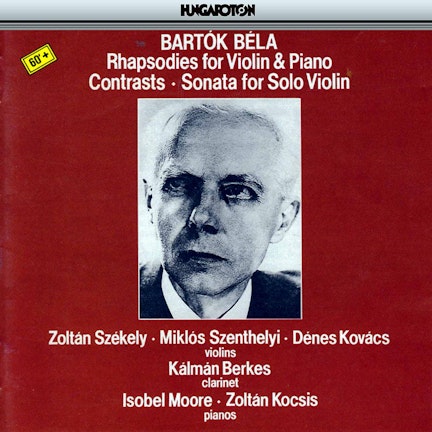
Bartók: Rhapsodies for Violin and Piano, Contrasts, Sonata for Solo Violin