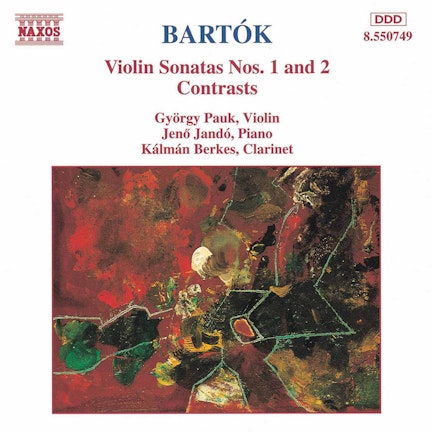
The premiere of Bartók's Sonata No. 1 for Violin and Piano was a major success, attended by musical celebrities like Ravel, Poulenc, Milhaud, and Stravinsky, who each favored different movements.
Composer's Artistic Vision
Bartók aimed to integrate his diverse folk music experiences into his modern style without directly quoting folk sources, a concept explored differently in his Sonatas No. 1 and No. 2.
Composition History
Bartók's two Sonatas for Violin and Piano were conceived after World War I, driven by his desire to reconnect with the international music scene and present new large-scale works.
Composition History
Bartók's Sonata for Solo Violin was commissioned by Yehudi Menuhin, a renowned violinist, after Bartók attended Menuhin's recital where he played Bartók's first violin sonata and Bach's C-major solo sonata.
Composer Biography
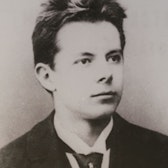
Béla Bartók, the composer, wrote several violin and piano pieces during his grammar school years for his fellow students, though many of these early works are now lost or unpublished.
Composition History
The d'Arányi sisters, Adila and Jelly, both accomplished violinists whom Bartók knew from his Academy years, inspired the final form of his Sonata No. 1 for Violin and Piano.
Cultural Impact
Maurice Ravel, inspired by Jelly d'Arányi's playing at a private performance of Bartók's Sonata No. 1, decided to compose his famous work Tzigane for her.