Berlioz's Roméo et Juliette was commissioned by the renowned violinist Niccolò Paganini, who was impressed by Berlioz's Symphonie fantastique.
Recording & Production
This recording of Berlioz's Roméo et Juliette was made live at Davies Symphony Hall in San Francisco from June 28 to July 1, 2017.
Composer's Artistic Vision
Berlioz insisted that Roméo et Juliette was a "choral symphony," not an opera or cantata, despite its use of voices.
Composer's Artistic Vision
Berlioz idolized Shakespeare's works, viewing them as reflecting the Romantic aesthetic of highly personalized expression.
Compositional Technique
Berlioz's Roméo et Juliette is an original "dramatic symphony" that incorporates elements from oratorio, melodrama, operatic movements, song, and ballet, in addition to standard symphonic writing.
Composition History
Niccolò Paganini gifted Berlioz 20,000 francs after hearing Harold en Italie, providing Berlioz with financial security to compose Roméo et Juliette.
Composer's Artistic Vision
Berlioz chose instrumental language over sung words for the love scenes in Roméo et Juliette, believing it to be "richer, more varied, less precise, and by its very indefiniteness incomparably more powerful."
You might also enjoy...
Stravinsky: Perséphone
Stravinsky: Perséphone
Bussotti, S.: Il catalogo e questo
Stravinsky: Perséphone
Mendelssohn: Antigone
Prokofiev: Ivan the Terrible
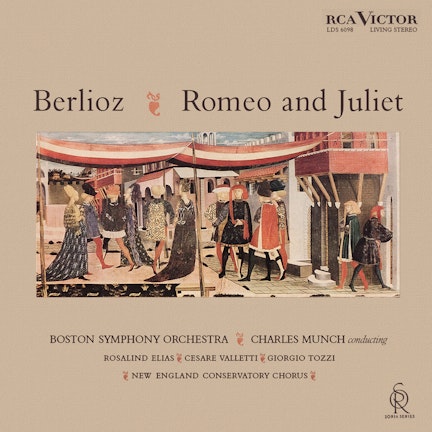
Berlioz: Roméo et Juliette, Op. 17 (1961 Recording)
Berlioz: Roméo et Juliette
Mendelssohn: Die erste Walpurgisnacht - Brahms: Nänie - Schumann: Der Königssohn