Berlioz's Roméo et Juliette is considered one of the most original conceptions of the nineteenth century, deftly poised between symphony and stage drama.
Composer Biography
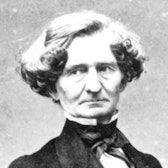
Berlioz's discovery of Shakespeare in 1827 was overwhelming, not only for the drama but also because the leading actress, Harriet Smithson, became his wife six years later.
Composition History
The opportunity to compose Roméo et Juliette came from a gift of 20,000 francs from the violinist Paganini, and its formal shape was indirectly inspired by Beethoven's Ninth Symphony.
Notable Performances
Roméo et Juliette had its first three performances in Paris at the end of 1839, conducted by Berlioz, and deeply impressed Wagner, who was present.
Composition History
Berlioz's Roméo et Juliette, his third symphony, was inspired by his greatest literary passion, Shakespeare, and his own fervent experiences.
Compositional Technique
Berlioz's Roméo et Juliette is a choral symphony, using a double chorus to represent the warring families and solo voices as secondary characters, while the lovers themselves are represented purely by the orchestra.
Composer's Artistic Vision
Berlioz intentionally did not set the famous balcony scene as a love duet because it is a symphony, not an opera, and he believed words were too precise to express the sublimity of this love, which only music could paint.
You might also enjoy...
Stravinsky: Perséphone
Stravinsky: Perséphone
Berlioz: Roméo et Juliette
Bussotti, S.: Il catalogo e questo
Stravinsky: Perséphone
Mendelssohn: Antigone
Prokofiev: Ivan the Terrible
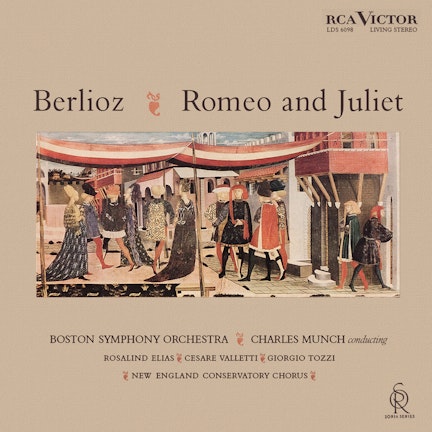
Berlioz: Roméo et Juliette, Op. 17 (1961 Recording)
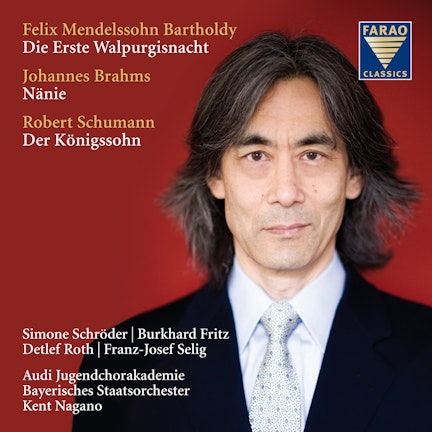
Mendelssohn: Die erste Walpurgisnacht - Brahms: Nänie - Schumann: Der Königssohn