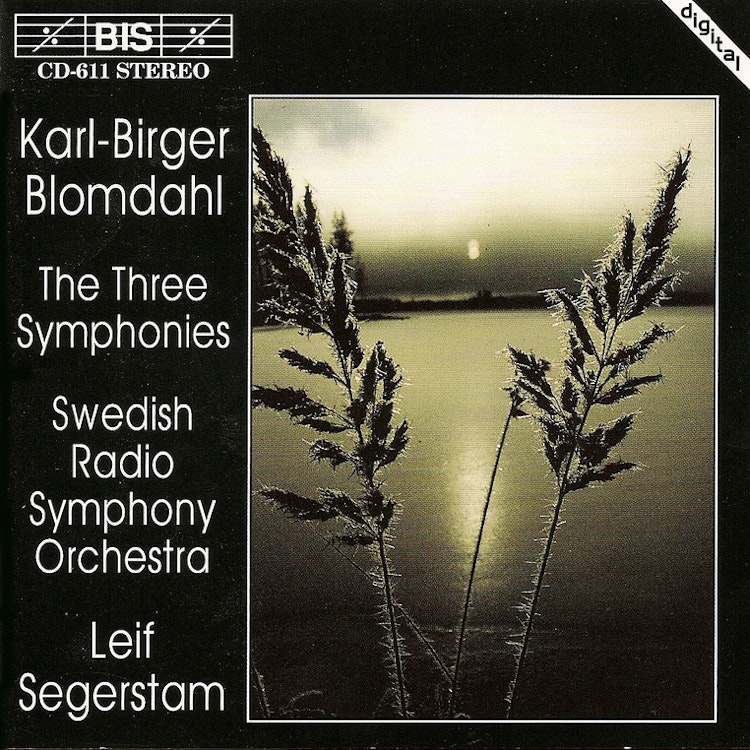
Blomdahl's compositional style evolved through three periods, moving from Hindemith's influence to a more personal language influenced by Central European music, and later experimenting with timbral colors.
Compositional Technique
Blomdahl's in-depth study of 16th-century vocal music, particularly Palestrina, resulted in a high level of craftsmanship and a strong emphasis on intervallic relations and counterpoint in his music.
Composer's Artistic Vision
Blomdahl continuously expanded his musical language with influences from styles other than Western art music, incorporating jazz into many of his works, such as the opera Aniara.
Composer's Artistic Vision
Blomdahl's belief that a composer's self-expression should take precedence over efforts to communicate with the public was criticized as elitist by some.
Composer Biography
Karl-Birger Blomdahl, a controversial and rebellious figure, became one of Sweden's most important 20th-century composers, active as a pedagogue, administrator, and public commentator.
Composer Biography
Blomdahl's early engineering studies were halted when he began private composition studies with Sweden's foremost modernist, Hilding Rosenberg, in Stockholm.
Composition History
Blomdahl founded the 'Monday Group' to promote new music, reacting against the conservative quality of Swedish musical activity, and discussing works by Hindemith and the Second Viennese School.