Boccherini's String Quartet, Op. 52, No. 3, was written in 1795 for King Friedrich Wilhelm II of Prussia, a highly accomplished cellist who also commissioned chamber music from Haydn, Mozart, and Beethoven.
Compositional Technique
Boccherini's string quintets, including the one on this album, feature a wide variety of dynamic, articulation, and special-effect markings, such as the now-obsolete 'stracinando' (dragging the bow).
Composer's Artistic Vision
Composer Luigi Boccherini believed music should speak to the heart and be filled with sentiment and passion, stating that "Music deprived of sentiment and of passions is meaningless."
Compositional Technique
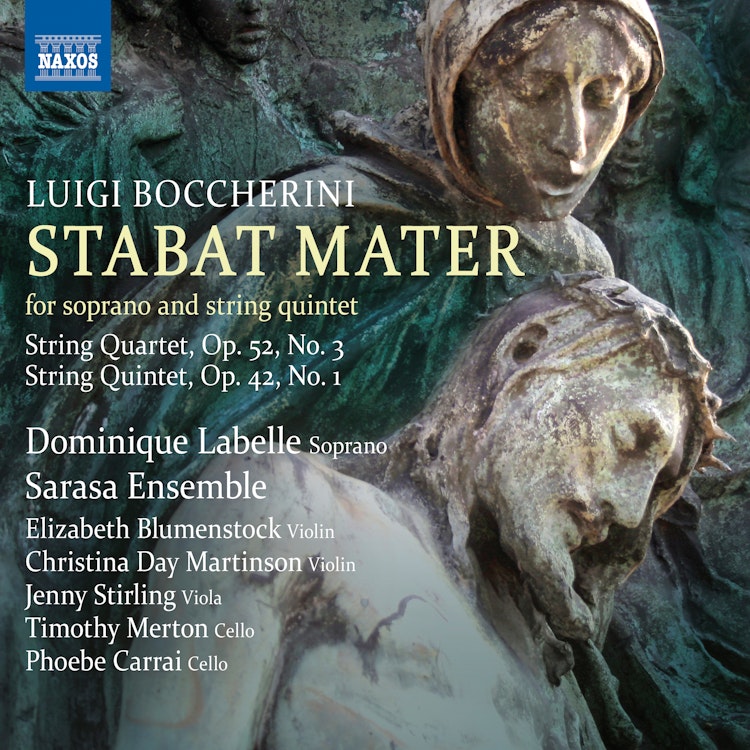
Boccherini recycled material from his Stabat Mater in his String Quintet in F minor, Op. 42, No. 1, with themes from the vocal work appearing in the quintet's movements.
Performer Biography
Phoebe Carrai, a cellist on this recording, was a member of Musica Antiqua Köln in 1982, making over 40 recordings for Deutsche Grammophon.
Compositional Technique
Boccherini's Stabat Mater is uniquely scored for a solo soprano with a string quintet (two violins, viola, and two cellos), chosen for its intimacy.
Composer Biography
Luigi Boccherini, born in Lucca, displayed great aptitude for the cello from a young age, learning music from his double bass player father.