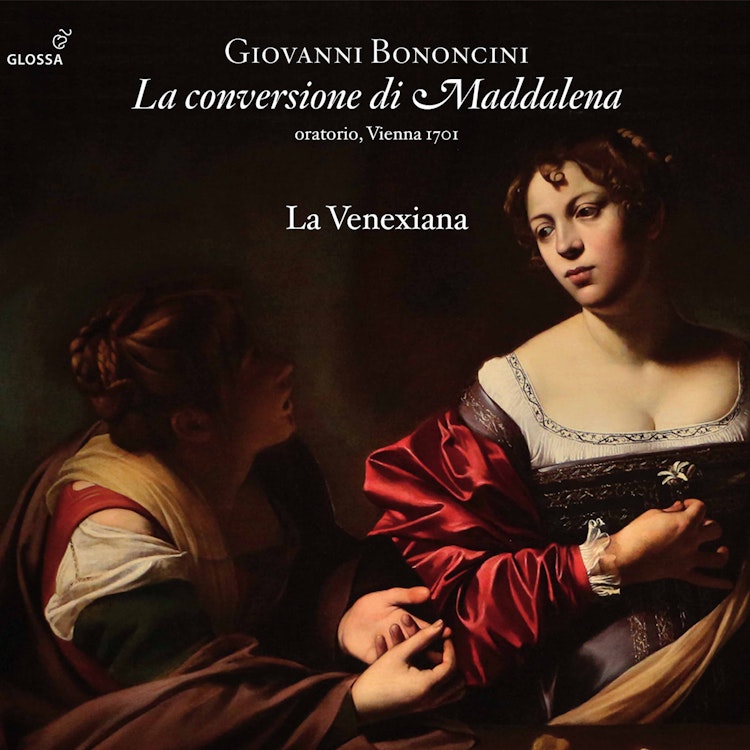
The score for La conversione di Maddalena intermittently mentions violins, violas, viola da gamba, cello, bass, and harpsichord, and includes instructions for concertino soloists.
Compositional Technique
Bononcini's La conversione di Maddalena features four characters: Mary Magdalene (soprano), her sister Martha (contralto), Divine Love (soprano), and Profane Love (basso).
Historical Context
By the 18th century, the oratorio genre evolved to be closely related to contemporary opera, serving as dramatic entertainment during Lent when opera performances were prohibited.
Critical Reception
Bononcini's recitative was praised by Charles Burney, an 18th-century music historian, as "the best of the time, and in the true genius of the Italian language."
Composition History
Bononcini's oratorio, La conversione di Maddalena, was composed in 1701 for the Hofburgkapelle, the court chapel of Vienna, as one of five oratorios for the Lenten season.
Composer Biography
Giovanni Bononcini, the composer, was considered one of Europe's foremost composers and cellists by the early 18th century.
Composer Biography
At just 18 years old, Bononcini had already been employed as a cellist and singer, accepted into a prestigious academy, published six music collections, and produced two oratorios.
You might also enjoy...
Stradella: Santa Pelagia
Handel: Semele
Bach: "Schweigt stille, plaudert nicht" (Kaffeekantate) & "Mer hahn en neue Oberkeet" [Bauernkantate]