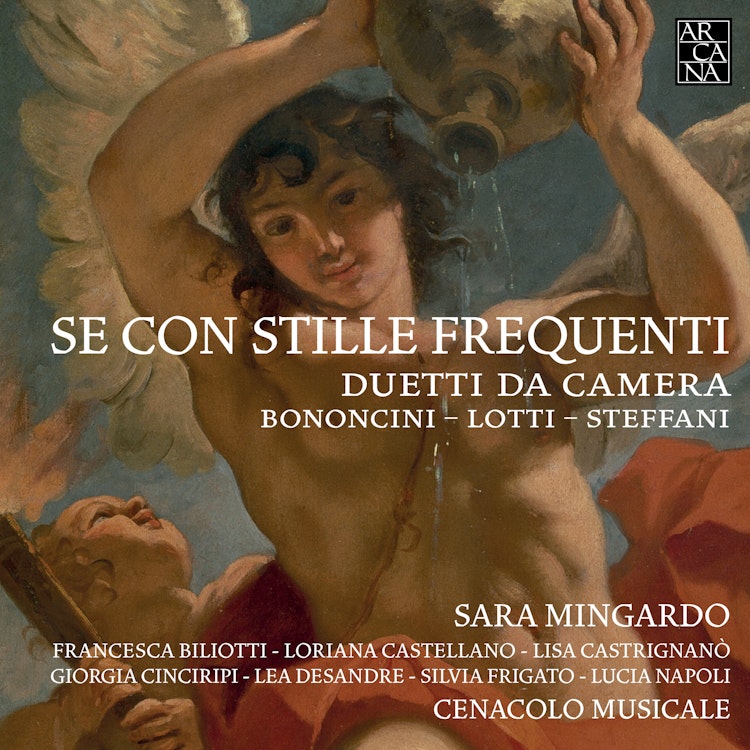
Bononcini, Lotti & Steffani: Se con stille frequenti. Duetti da camera
11/10/2016, 25 Tracks, 1:02:51
Featuring
Lea Desandre
Silvia Frigato
Loriana Castellano
Francesca Biliotti
Sara Mingardo
Giorgia Cinciripi
Lisa Castrignanò
Lucia Napoli
Cenacolo Musicale
Agostino Steffani
Antonio Lotti
Francesco Lucio
Giovanni Battista Bononcini
Did you know?
1/7
Compositional Technique
Steffani's duets, numbering over seventy, served as universal models for contemporaries and successors like Handel, paralleling Corelli's trio sonatas in the vocal sphere.
Composer Biography
Agostino Steffani (1654-1728), a prominent figure in the chamber duet's 'golden age', divided his life between musical composition and his official vocations as a churchman (eventually a bishop) and diplomat.
Composer's Artistic Vision
Italian poets writing for cantatas and duets could 'programme' the musical setting, anticipating composers' preferences in a highly effective and symbiotic partnership.
Recording & Production
This recording is the result of a project by Barocco Europeo, guided by internationally celebrated contralto Sara Mingardo, to foster young singers and inaugurate a series of 'musical rediscoveries'.
Historical Context
Most Italian cantatas and duets of the 17th and 18th centuries were composed for professional singers in noble households, used for domestic recreation or private functions.
Historical Context
The introduction of basso continuo around 1600 allowed for vocal chamber music to be written for only one or two singers, increasing dramatic realism and vocal virtuosity.
Critical Reception
Antonio Lotti's (1666-1740) published collection, Duetti, terzetti e madrigali, Op. 1, attracted much attention, including criticism from Benedetto Marcello and plagiarism by Vivaldi.
You might also enjoy...
Bertali: Valoroso
DG 120 – Archiv Produktion
Dance Music Through the Ages: Renaissance; Early Baroque; High Baroque; Rococo; Viennese Classical Period; Biedermeier Period
Laudi spirituali
Schabernack - A Treasure Trove of Musical Jokes
Woodcock: Concertos for Recorder & Oboe
The Best of the Baltimore Consort
Neapolitan Cello Concertos
Guerre et Paix
Concerto Imperiale (L'héritage de Monteverdi)
Concerti Curiosi
Vitae Pomeranorum, Vol. 2
Lagrime e sospiri
Morley, T.: Joyne Hands / Akeroyde, S.: Jenny, My Blithest Maid / Nicholson, R.: the Jewes Dance (Tunes From the Attic)