Bossi traveled throughout Europe and America, connecting with fellow organists like Camille Saint-Saëns, Marcel Dupré, and Karl Straube, to align Italian organ culture with Central European standards.
Instruments
The Furtwängler/Hammer Organ in Verden Cathedral, built in 1916, features a pneumatic soundboard and 3640 pipes, with swell pedals for the second and third manuals.
Critical Reception
Bossi's symphonic works abruptly fell out of favor after World War II, partly due to his conservative adherence to the Brahmsian tradition and his joining the Fascist Party in 1921.
Composer's Artistic Vision
Bossi never completed his organ studies, which can be seen as a critique of the Italian organ practice of his time, heavily influenced by opera.
Cultural Impact
Under Bossi's influence, state-certified organ classes were introduced in Italy, enhancing the organ's artistic status as a free concert instrument.
Composer Biography
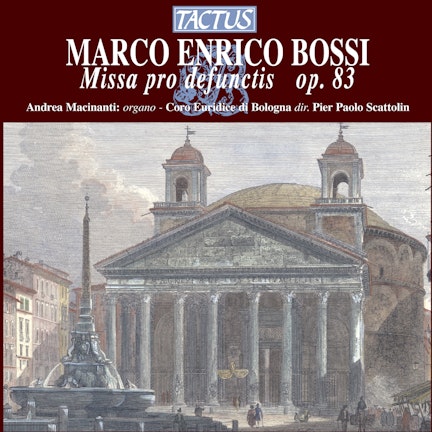
Marco Enrico Bossi, born in 1861, came from a family of musicians; both his father Pietro and his son Renzo were also organists and composers.
Composer's Artistic Vision
Bossi, along with other composers like Giovanni Sgambati, fought to establish Italian instrumental music that could stand independently of the dominant opera culture.
You might also enjoy...
Reverie
Kodaly: Complete Organ Music
Organ Christmas
Cathedral Echoes
Salome's Dance
Blarr, O.G.: Organ Music, Vol. 3 - Healing Water / Der Lobende / Holy Tango Ii
Dvorak: Symphony No. 9 (Arr. for Organ)
Leighton: Missa de Gloria - Et Resurrexit - Hymn Fantasies