The premiere of the first three movements of Brahms's Ein deutsches Requiem in Vienna in 1867 was a total fiasco, though a later six-movement version was a success.
Performer Biography
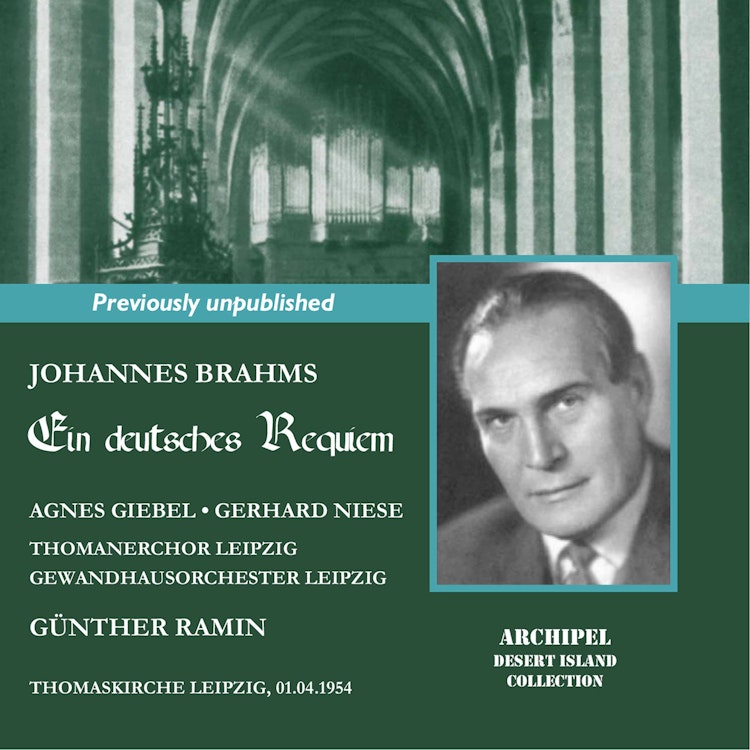
Günther Ramin, the conductor, dedicated his entire life's work to the Thomaskirche and the music of Johann Sebastian Bach, serving as Thomaskantor from 1940 until his death in 1956.
Interpretation
Despite his strong ties to Baroque music, conductor Günther Ramin was a romantic at heart, and his conducting style was never historically distant but passionate and deeply spiritualized.
Compositional Technique
Brahms's Ein deutsches Requiem is a consolation for the living, unlike the Catholic Mass which is a prayer for the souls of the dead, and he chose texts from the Old and New Testaments and Psalms.
Composition History
Brahms added the fifth movement, 'Ihr habt nun Traurigkeit' (Ye now therefore have sorrow), to his Requiem after the death of his beloved mother.
Compositional Technique
Brahms broke new ground in the Requiem genre through his text selection, musical interpretation, instrumentation, and emotional range, from delicate 'Mysterioso' to the dithyrambic 'Tod, wo ist Dein Stachel'.
Recording & Production
This recording of Brahms's Ein deutsches Requiem was made in the Thomaskirche Leipzig on April 1, 1954, and was previously unpublished.
You might also enjoy...
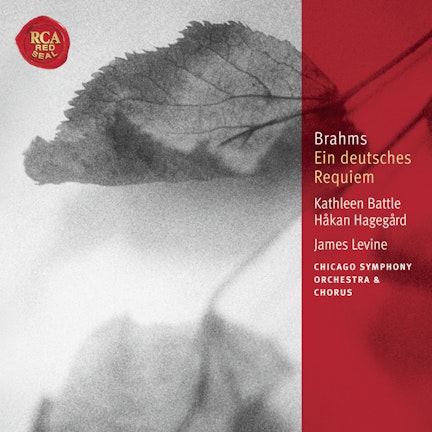
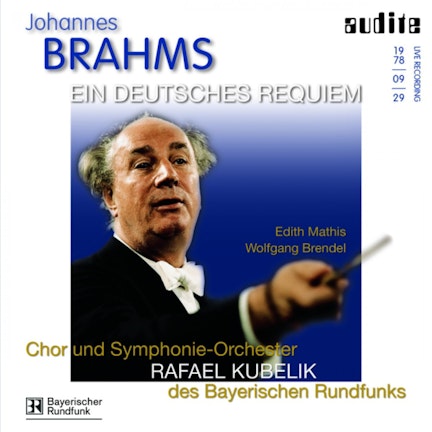
Brahms: Ein deutsches Requiem: Classic Library Series