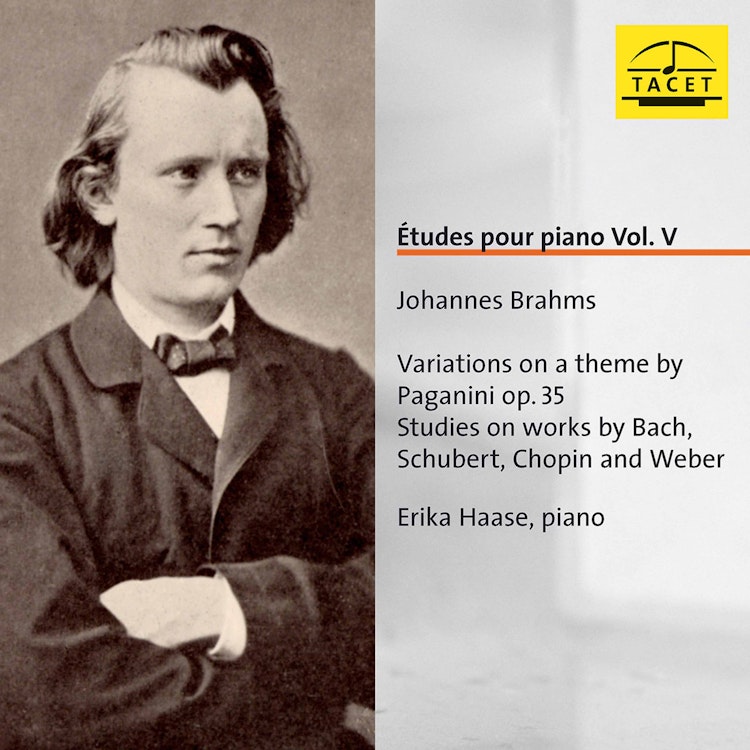
Brahms's Paganini Variations feature experimental techniques, such as two rhythmically conflicting voices executed with extreme hand crossings, and polyrhythmic complexity combining 3/8 and 2/4 bars.
Compositional Technique
Brahms's adaptation of Bach's Chaconne for solo violin is unique because he limited the piano to playing with only the left hand, aiming to adjust his instrument to the original violin piece.
Compositional Technique
In his Paganini Variations, Brahms strictly adheres to the abstract metric-harmonic framework of Niccolò Paganini's theme, using the bass line as the 'firm ground' for his variations.
Composer Biography
Johannes Brahms, though known for his spiritual works, began his career in 1853 as a pianist and concertized regularly until the 1880s.
Composition History
Brahms's Paganini Variations, Op. 35, composed in 1862/63, were his only original contribution to the concert etude genre and concluded a nearly ten-year focus on piano variation sequences.
Performer Biography
Erika Haase, the pianist on this album, won the 'Kranichstein Music Prize' in 1959 at an international vacation course of modern music and has been a Professor of Piano since 1974.
Composer's Artistic Vision
Brahms's Five Studies for the Pianoforte are adaptations of works by other composers, which he valued enough for publication but did not assign opus numbers, indicating they weren't considered original works.
You might also enjoy...
Götterdämmerung
Rubinstein: Fantasia in E Minor, Op. 77, 5 Pieces, Op. 69 & Trot de cavalerie