The work's instrumental opening features a repeated timpani motif, resembling a blow of fate, and musically summarizes the Tantalus myth of rise and fall.
Composition History
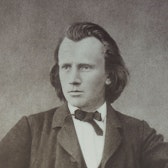
Brahms dedicated his cantata "Gesang der Parzen" (Song of the Fates) to Duke George II of Saxe-Meiningen, a patron of the arts and a friend since 1881.
Performer Biography
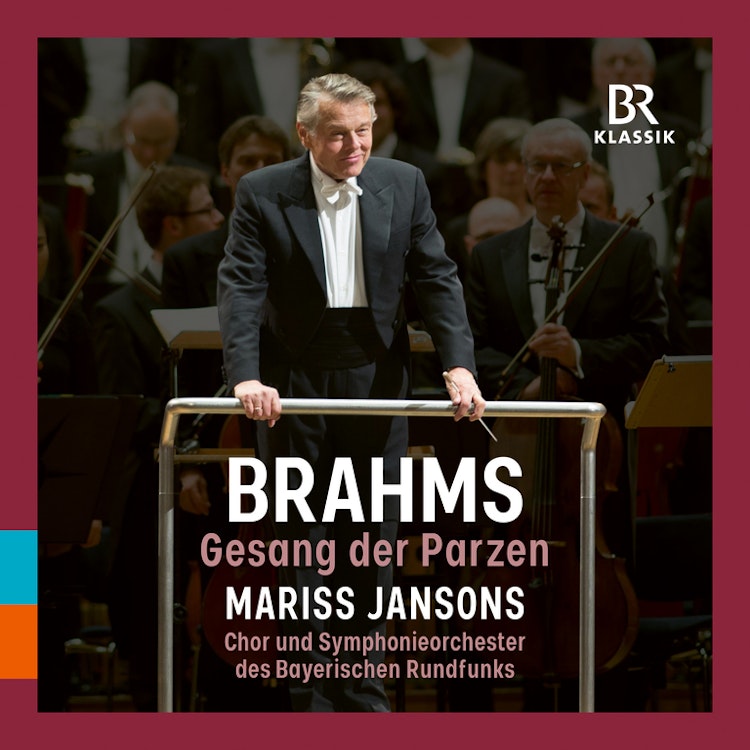
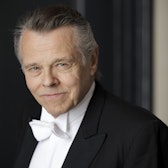
Mariss Jansons, the conductor on this recording, was born in Riga in 1943, the son of conductor Arvīds Jansons.
Performer Biography
Mariss Jansons was Chief Conductor of the Symphonieorchester des Bayerischen Rundfunks and the Bavarian Radio Chorus from 2003 until his death in 2019.
Composition History
The inspiration for "Gesang der Parzen" came from Goethe's play "Iphigenia in Tauris," which was a favorite of Duke George II and his wife, and performed by the Meiningen Court Theatre.
Compositional Technique
Brahms's "Gesang der Parzen" uses a six-part mixed choir and a large orchestra, with the key of D minor characterizing its morbid nature.
Compositional Technique
Brahms primarily uses a declamatory style to ensure the text remains intelligible, with instrumental parts commenting on the content.
You might also enjoy...
Davis: Magnificat: IV. Deposuit
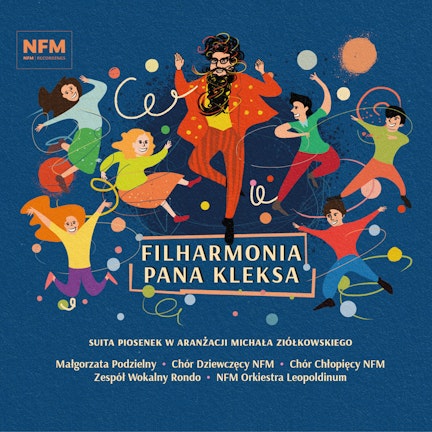
Mr Kleks' Philharmonic
Jonathan Dove: Sappho Sings
Lewandowski: 18 Liturgical Psalms
Parry: Invocation To Music
Britten: Spring Symphony / Welcome Ode / Psalm 150
Harvey: Kyrie - A Collection of Original Choral Music
Langgaard: Music of the Spheres
Britten: Spring Symphony - Welcome Ode - Psalm 150