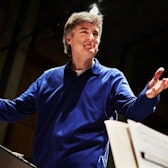
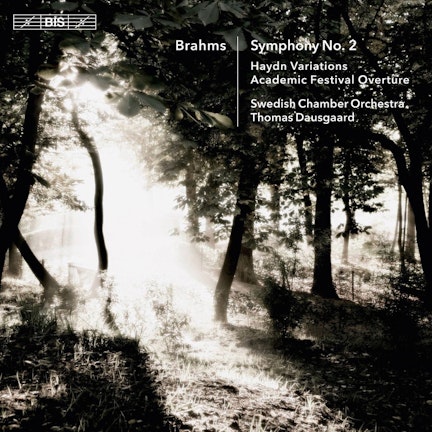
Thomas Dausgaard and the Swedish Chamber Orchestra complete their cycle of Brahms symphonies with No. 4 in E minor – his masterful late work with its striking passacaglia finale. The performers also show another aspect to Brahms through nine ebullient Hungarian Dances, orchestrated by Dausgaard himself, before the darker side of Brahms prevails in the Tragic Overture.
Featuring
Thomas Dausgaard
Svenska Kammarorkestern
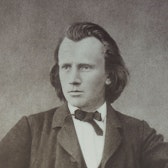
Johannes Brahms
Did you know?
1/7
Compositional Technique
The fourth movement of Brahms's Symphony No. 4 uses the Baroque variation form of passacaglia or chaconne, which fascinated him from an early age.
Compositional Technique
Brahms's Symphony No. 4 combines motivic and thematic interconnectedness with variation technique and masterful use of formal patterns.
Composer Biography
Johannes Brahms's Symphony No. 4 in E minor is often referred to as his 'Elegiac' symphony.
Cultural Impact
Brahms's Hungarian Dances, originally for piano four-hands, were what first made him truly popular, rather than his songs, chamber music, or Requiem.
Critical Reception
Hugo Wolf, a 'New German' composer and critic, scornfully remarked that Brahms's Fourth Symphony showed 'the art of composing without any ideas'.
Composition History
Brahms's Tragic Overture, Op. 81, was announced by him in August 1880 with self-deprecating words, calling it 'Dramatic' but disliking the title.
Performer Biography
Thomas Dausgaard, the conductor on this album, studied with Leonard Bernstein and assisted Seiji Ozawa early in his career.