Brahms: Piano Concerto No. 2 & Three Intermezzi Op. 117
9/19/2025, 7 Tracks, 1:01:03
Featuring
Francesco Piemontesi
Manfred Honeck
Gewandhausorchester Leipzig
Johannes Brahms
Did you know?
1/7
Composition History
The Three Intermezzi, Op. 117, were likely inspired by pianist Ilona Eibenschütz, a keyboard prodigy, and also by Brahms's old love Clara Schumann, who was no longer able to play large works.
Compositional Technique
Brahms's piano concertos, including the Second, are not conventional soloist concertos; instead, they are musical architectures resembling a grand symphonic arc with the piano as an equal partner to the orchestra.
Composition History
Brahms referred to his Three Intermezzi, Op. 117, as 'the lullabies of my sorrows' and attached a mournful folk poem to the first one: 'Sleep soft my child, sleep soft and sweet,/ It grieves me to see you weep.'
Composition History
The second movement of the Piano Concerto No. 2, which Brahms jokingly described as a 'tiny, tiny wisp of a scherzo,' was originally drafted for his Violin Concerto.
Notable Performances
After its premiere in Budapest on November 9, 1881, Brahms and his collaborator Hans von Bülow (a pianist/conductor) toured the Piano Concerto No. 2, sometimes switching roles at the piano and podium.
Composer's Artistic Vision
Brahms's music, as captured by the inscription in the Leipzig Gewandhaus, 'Res severa verum gaudium' ('True joy is a serious matter'), is not casual entertainment but offers immense reward to those who engage with it.
Composition History
Brahms nicknamed his Piano Concerto No. 2 'the Long Terror' due to its gigantic scale, though he composed it during a sunny vacation in Italy, making it one of the most untroubled major efforts of his life.
You might also enjoy...
Brahms: Piano Concerto No. 1, Op. 15
Brahms - Piano Concerto No. 1/Drei Intermezzi Op. 117
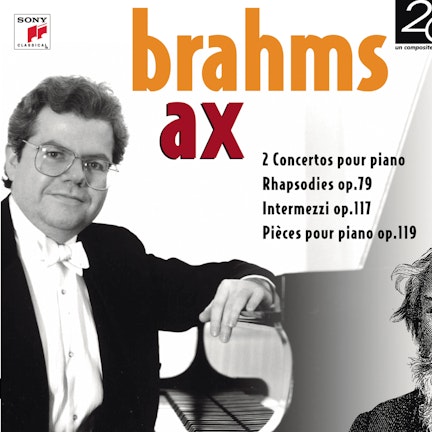
Brahms/Ax
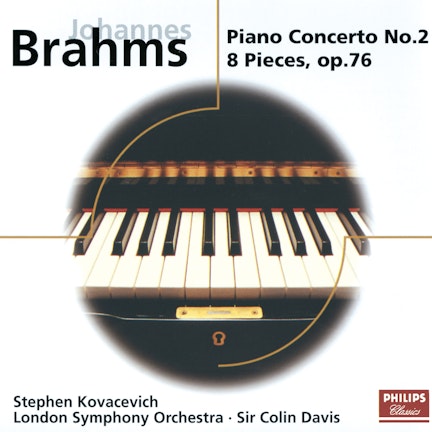
Brahms: Piano Concerto No.2; 8 Piano Pieces Op.76
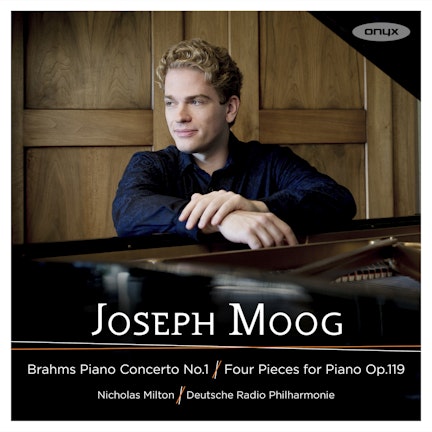
Brahms: Piano Concerto No. 1, Four Piano Pieces Op. 119
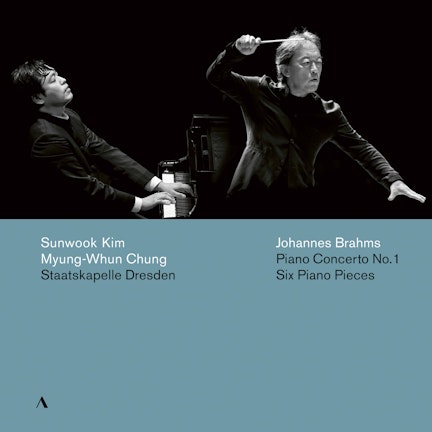
Brahms: Piano Concerto No. 1 in D Minor, Op. 15 & 6 Piano Pieces, Op. 118
Brahms: Piano Concerto No. 1 in D Minor & Chaconne by J.S. Bach from 5 Studies for the Piano