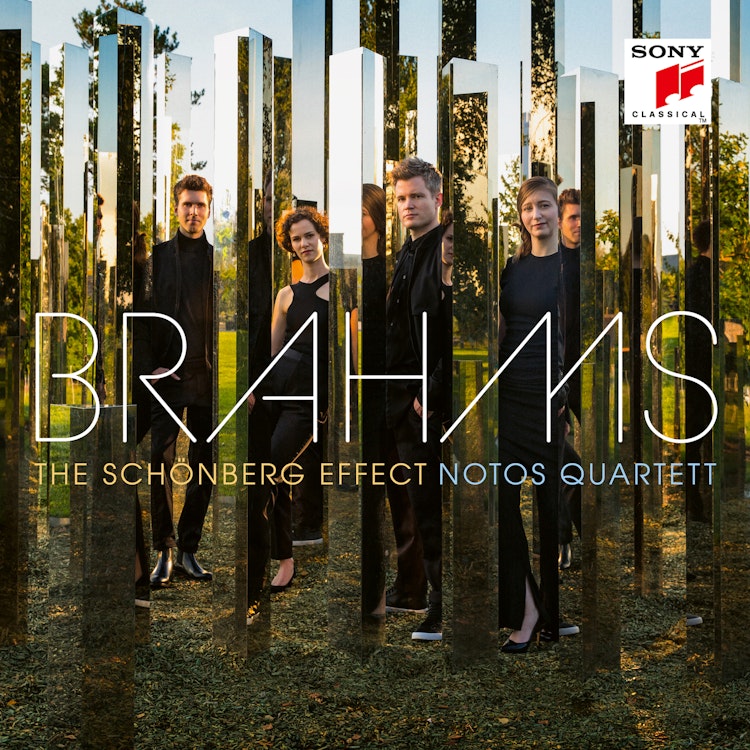
Brahms: Piano Quartet No. 1, Symphony No. 3 - The Schoenberg Effect
3/19/2021, 8 Tracks, 1:12:50
Featuring
Sindri Lederer
Andrea Burger
Philip Graham
Antonia Köster
Notos Quartett
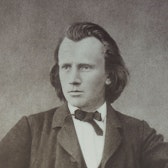
Johannes Brahms
Did you know?
1/7
Notable Performances
Brahms made his Viennese debut as both a composer and pianist on November 16, 1862, performing his Piano Quartet No. 1 in G minor.
Composer's Artistic Vision
Arnold Schoenberg, a composer known for his twelve-tone technique, arranged Brahms's Piano Quartet in G minor for orchestra because he liked the piece, it was seldom played, and he wanted to hear all its parts clearly.
Interpretation
The Notos Quartet's album explores the boundary between chamber music and symphony, featuring Brahms's First Piano Quartet and an arrangement of his Third Symphony.
Critical Reception
Early critical reception of Brahms's Piano Quartet No. 1 in G minor in Vienna was largely negative, with critics using metaphors like 'desolation, tempest, horror, frost, annihilation, and hopelessness' to describe it.
Compositional Technique
Brahms's Piano Quartet No. 1 in G minor incorporates Hungarian elements, notably in its famous Rondo alla Zingarese and the modal coloring of the opening movement's main theme.
Composition History
Brahms completed his Piano Quartet No. 1 in G minor in the summer of 1861, two years after playing an early version with his friend, violinist Joseph Joachim.
Interpretation
The Notos Quartet's arrangement of Brahms's Third Symphony aims to reveal its inherent chamber music qualities, contrasting with Schoenberg's orchestral arrangement of Brahms's Piano Quartet.