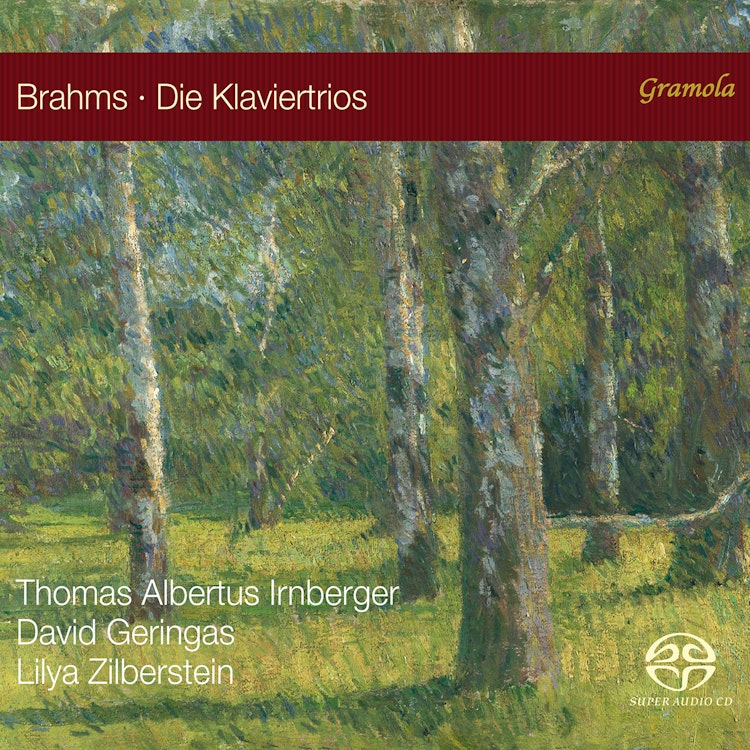
Brahms's Trio for Clarinet (Viola), Cello and Piano in A minor, Op. 114, was conceived with an alternative viola part, making both versions equally valid.
Composition History
Brahms's Piano Trio in B major, Op. 8, composed in 1853/54, was significantly revised 35 years later, with the revised version being the one most often performed today.
Composer Biography
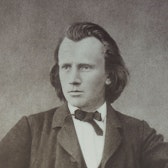
In his final years, Brahms developed a special connection to the clarinet, composing four significant works for the instrument, including the Clarinet Trio, Op. 114.
Composition History
Brahms composed his Piano Trio No. 3 in C minor, Op. 101, along with his Second Violin Sonata and Second Cello Sonata, during a productive summer in 1886 at Lake Thun in Switzerland.
Composer Biography
During the period he composed his first piano trio, Brahms met Joseph Joachim and Robert and Clara Schumann, developing romantic feelings for Clara.
Compositional Technique
The second movement of Brahms's Piano Trio No. 2 in C major, Op. 87, features a melancholy melody developed in five variations with a Hungarian tint, influenced by his friend Eduard Reményi.
Compositional Technique
The three original piano trios by Brahms, despite being composed decades apart, achieve a unified sound because the first trio was revised after the completion of the other two.
You might also enjoy...
Patrick Zimmerli - Piano Trios
Sinding: Piano Trios Nos. 2 and 3
Sinding: Piano Trios Nos. 2 and 3
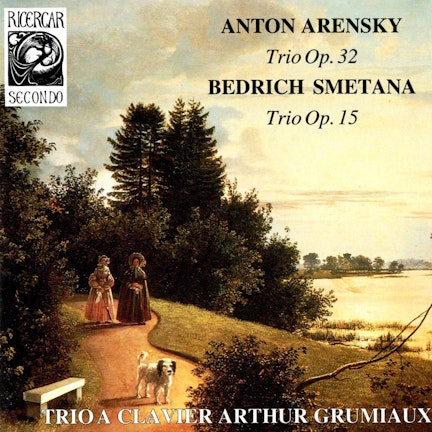
Arensky: Trio, Op. 32 - Smetana: Trio, Op. 15
Dvořák: Piano Trios Nos. 3 & 4, "Dumky", Vol. 1
Brahms: Piano Trios, Vol. 1
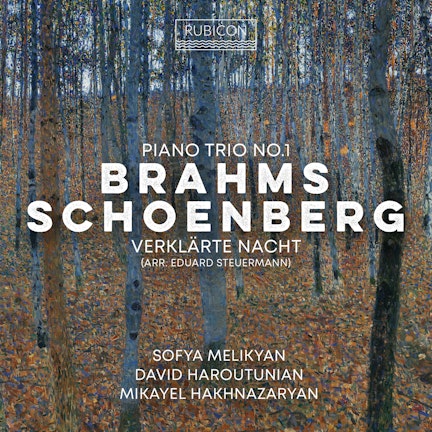
Brahms: Piano Trio No. 1 - Schoenberg: Verklärte Nacht
Dvořák: Piano Trios Nos. 3 & 4
The Piano Trio Collection - Dvorák: Trio No. 3 in F Minor, Op. 65 & Trio No. 4 in E Minor, Op. 90 "Dumky" - Heifetz Remastered
Tchaikovsky, Rachmaninoff: Piano Trio in A Minor, Trio Élégiaque
Arensky: Piano Trio No. 1 - Glinka: Trio Pathétique