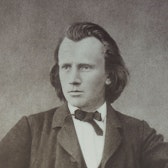
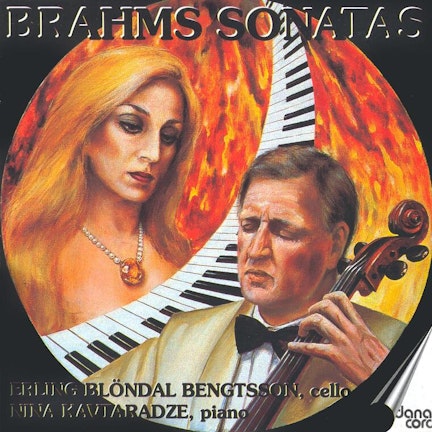
Johannes Brahms's father was a cellist, and Brahms himself claimed to have been proficient enough to play Bernhard Romberg's first cello concerto.
Compositional Technique
Brahms's Sonata for Cello and Piano No. 1 in E minor, Op. 38, features an elaborate fugue in its finale, which incorporates a theme from Contrapunctus XIII of Bach's The Art of Fugue.
Composition History
The Sonata for Cello and Piano No. 1 in E minor, Op. 38, was originally dedicated to Josef Gänsbacher, a lawyer, singer, composer, and cellist who helped Brahms secure a job as director of the Vienna Singakademie.
Composition History
The Sonata for Cello and Piano No. 2 in F major, Op. 99, was composed in the summer of 1886 in the Swiss resort of Hofstetten, overlooking Lake Thun.
Interpretation
Cellist Carl-Oscar Østerlind created the arrangement for cello of Brahms's Clarinet Sonata Op. 120 No. 2, going back to the original clarinet score for his transcription.
Instruments
Carl-Oscar Østerlind, the cellist on this album, plays a 1703 Giovanni Grancino cello, on loan from the Augustinus Foundation.
Performer Biography
Pianist Emil Gryesten has won several awards, including first prize at the Steinway Competition in Hamburg at age 15 and the Nordic Pianist Competition in 2010.
You might also enjoy...
Brahms: Cello Sonatas Nos. 1 & 2
Brahms: Sonata for Pianoforte and Cello
Brahms: Cello Sonatas Nos. 1 & 2
Brahms: Cello Sonatas Nos. 1 & 2
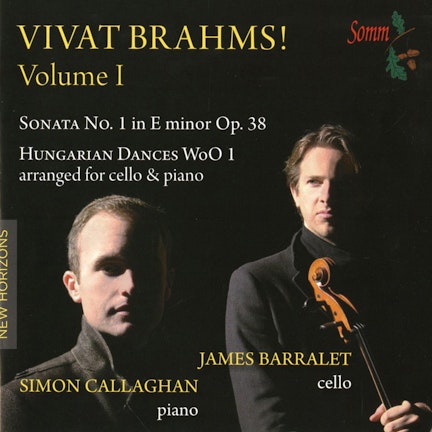
Vivat Brahms!, Vol. 1
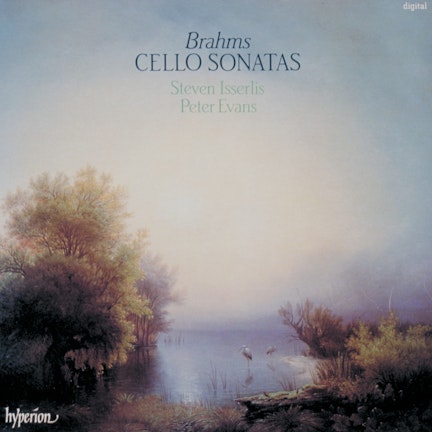
Brahms: Cello Sonatas
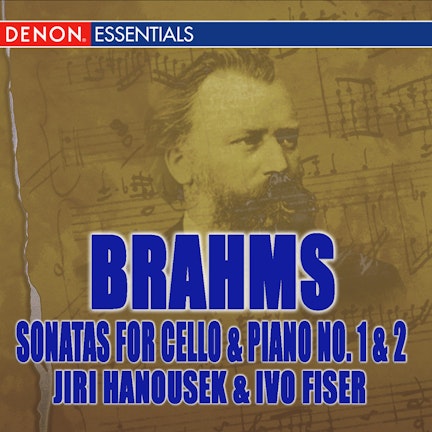
Brahms: Sonatas for Cello and Piano No. 1 & 2
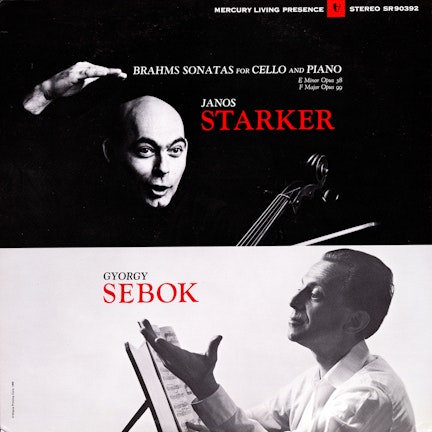
Brahms: Sonatas for Cello and Piano (The Mercury Masters, Vol. 4)
Brahms: Cello Sonata No. 1 in E Minor & Cello Sonata No. 2 in F Major
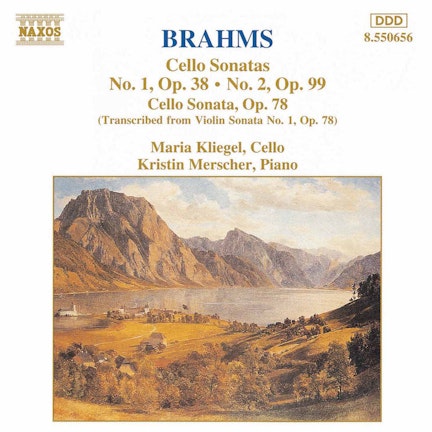
Brahms: Cello Sonatas Opp. 38, 78 and 99
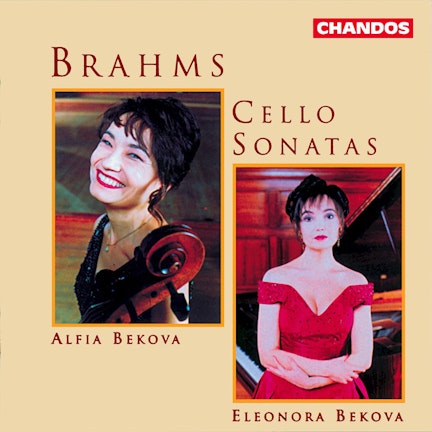
Brahms: Cello Sonatas
Brahms: Sonatas, Op. 38 & 39
Brahms: Cello Sonata No. 1 in E Minor, Op. 38 & Cello Sonata No. 2 in F Major, Op. 99