The cello's repertoire has historically been limited compared to the violin's, with significant contributions in the 19th century coming from only a few composers like Brahms.
Composer's Artistic Vision
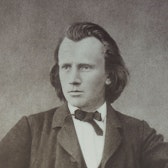
Johannes Brahms, the composer, was a 'lyrical classicist' who did not consciously cultivate relations with literary movements or the romantic concept of program music.
Composition History
The F.A.E. denomination in the 'F.A.E.' Sonata refers to Joseph Joachim's personal motto, 'Frei aber Einsam' (free but lonely).
Composition History
The 'F.A.E.' Sonata, which includes a Scherzo by Brahms, was a collaborative effort conceived by Robert Schumann as a tribute to his friend, the violinist Joseph Joachim.
Performer Biography
Erling Blöndal Bengtsson, the cellist on this recording, was dubbed 'the born cellist' because he instinctively positioned a violin between his knees at age three and gave his first public recital on a viola with an end-pin six months later.
Performer Biography
Erling Blöndal Bengtsson, the cellist, became the assistant to and later successor of the pre-eminent cellist Gregor Piatigorsky at the Curtis Institute of Music at a young age.
Compositional Technique
Brahms's first cello sonata in E minor includes a 'quasi Menuetto' second movement, harking back to classical rigor, and a finale with a fugue that resembles J.S. Bach's baroque counterpoint.
You might also enjoy...
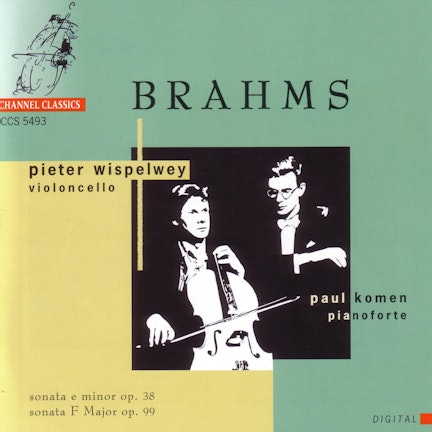
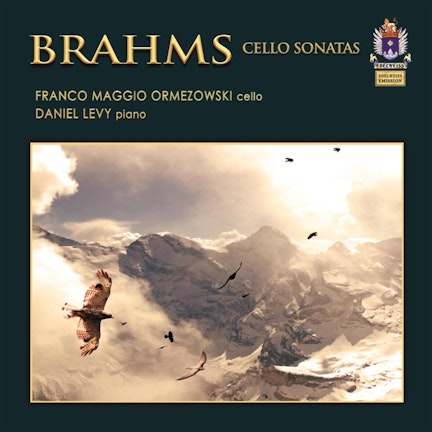
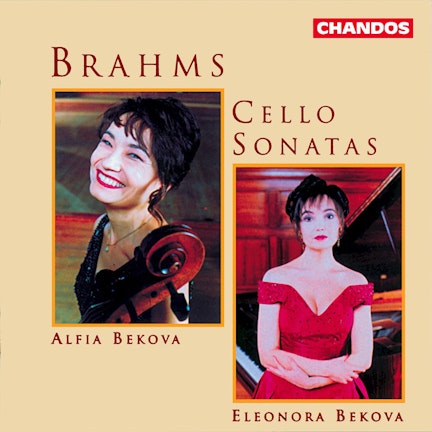
Brahms: Cello Sonatas
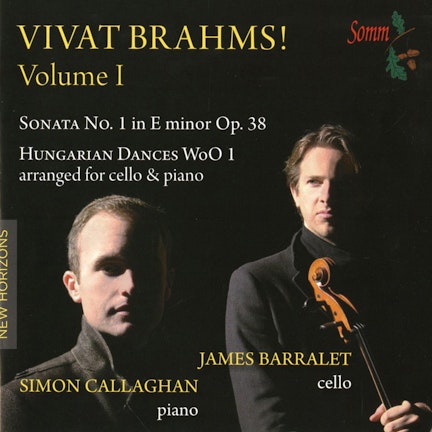
Brahms: Cello Sonatas Opp. 38, 78 and 99
Johannes Brahms: The Two Sonatas for Cello and Piano