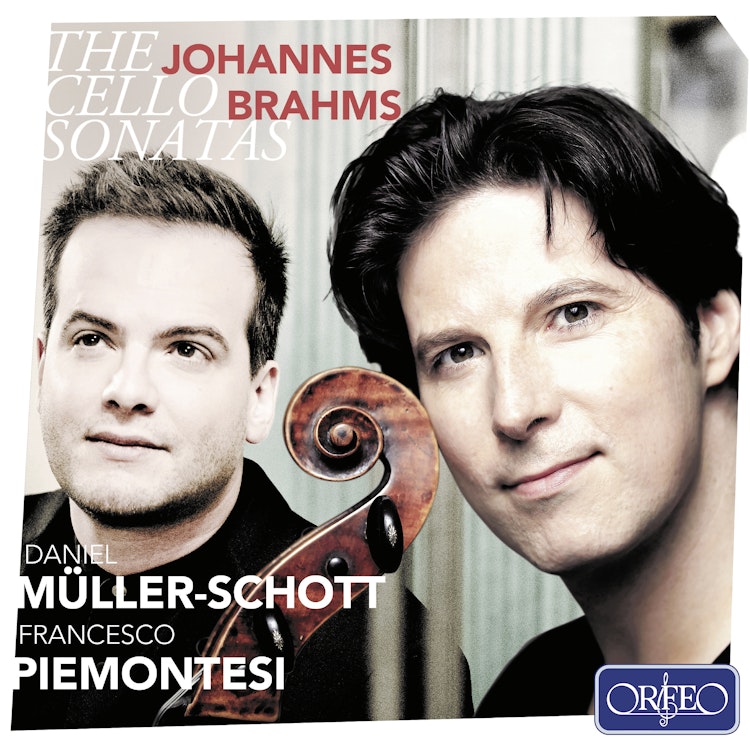
Daniel Müller-Schott and Francesco Piemontesi perform Brahms’s two Cello Sonatas alongside Müller-Schott’s own arrangement of the charming Violin Sonata No. 1 in D major. The Cello Sonatas, in E minor and F major, make a lively contrast in terms of mood. They were composed some 20 years apart, in 1862-5 and 1886.
Featuring
Daniel Müller-Schott
Francesco Piemontesi
Johannes Brahms
Did you know?
1/7
Compositional Technique
The Violin Sonata in G major, Op. 78, is known as the 'Regenlied-Sonate' (Rain Song Sonata) because its finale directly quotes the first line and piano accompaniment of Brahms' song 'Regenlied'.
Composition History
Johannes Brahms had a preference for composing pairs of works with the same instrumentation, often designing them with contrasting characters.
Composition History
The cello version of Brahms' Violin Sonata in G major, Op. 78, is believed to have been arranged by Brahms himself due to the high number of revisions (around 200) compared to the original.
Composition History
The Violin Sonata in G major, Op. 78, was closely linked by Brahms to two of his songs, 'Regenlied' and 'Nachklang', with a 'drop motif' from these songs running through the entire composition.
Instruments
Daniel Müller-Schott, the cellist on this recording, plays an 'Ex Shapiro' Matteo Goffriller cello, made in Venice in 1727, and a bow by F. Peccatte and F.X. Tourte from around 1820.
Composition History
The Cello Sonata in E minor, Op. 38, was composed in two stages: the first three movements in 1862, and the finale three years later in 1865.
Compositional Technique
The Cello Sonata in E minor, Op. 38, contains references to works by other composers, including Beethoven's Cello Sonata in A major, Schubert's piano dances, and Bach's 'Art of the Fugue'.
You might also enjoy...
Brahms: Cello Sonatas Nos. 1 & 2
Brahms: Cello Sonatas No. 1 and 2
Brahms: Four Sonatas for Cello & Piano
Brahms: Sonatas
Brahms, Schumann: Sonatas For Piano And Cello
Cello sonatas
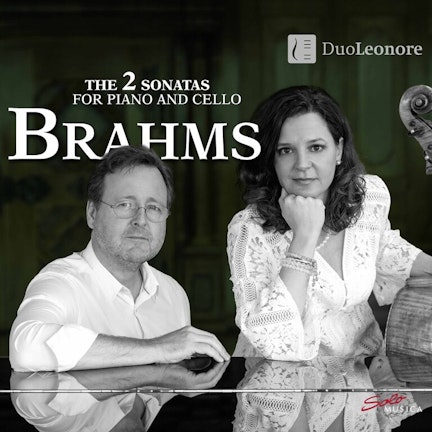
Brahms: The 2 Sonatas for Piano & Cello
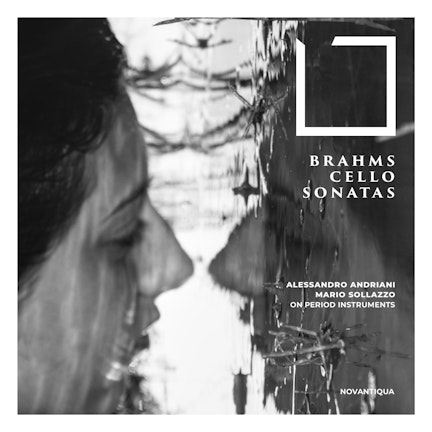
Brahms Cello Sonatas (On Period Instruments)
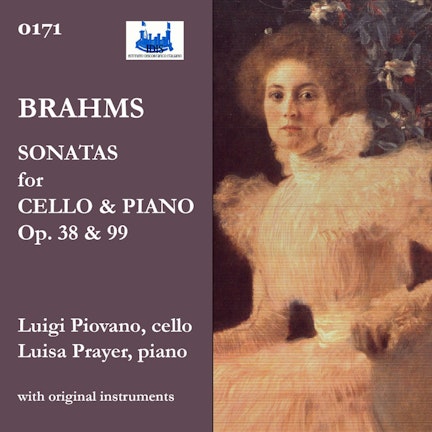
Brahms Sonata for Cello & Piano Op 39 & 99
Brahms: The Cello Sonatas
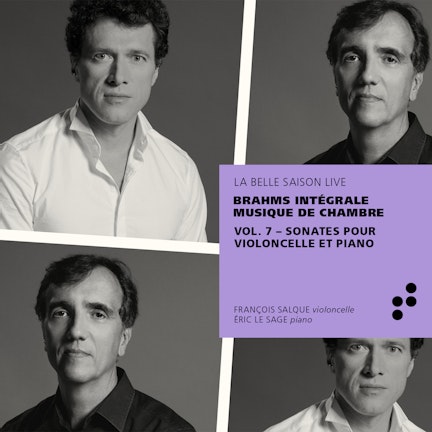
Brahms: Sonates pour violoncelle et piano (Intégrale musique de chambre), Vol. 7
Brahms: Cello Sonata No. 2 in F Major & Beethoven: Cello Sonata No. 5 in D Major