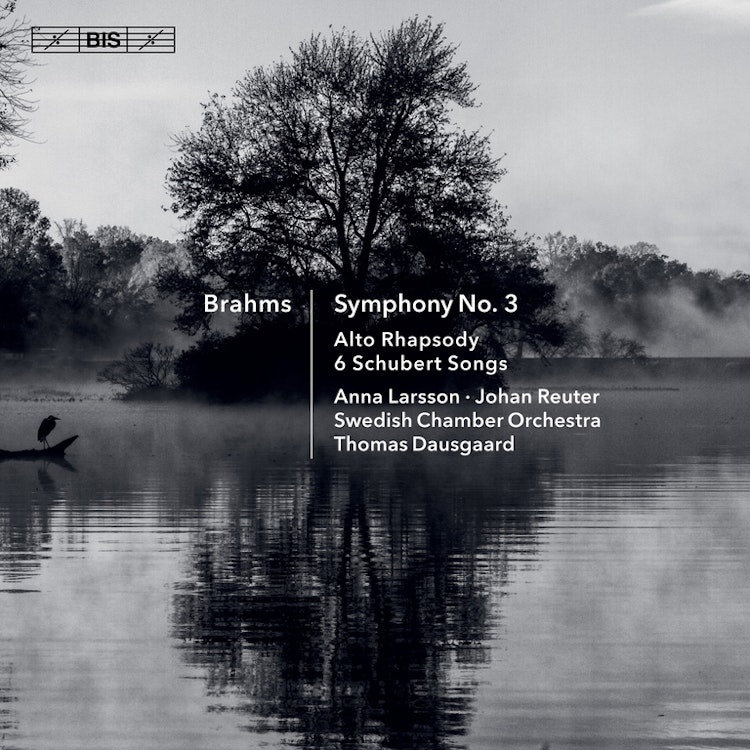
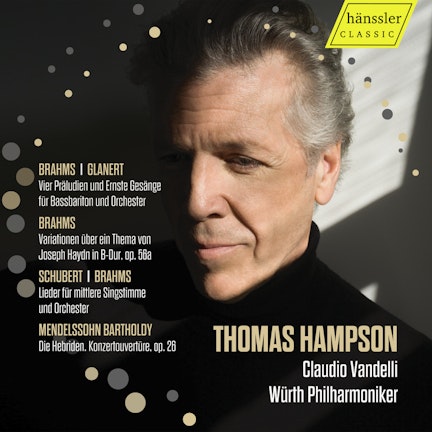
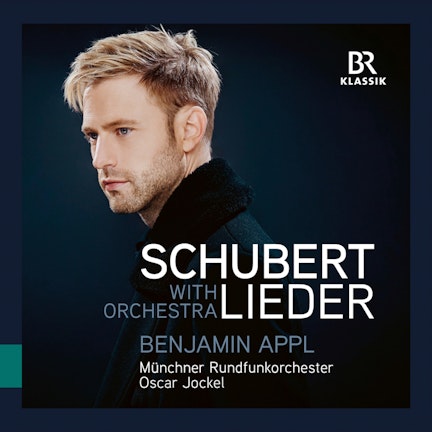
Brahms believed Franz Schubert, not Mendelssohn or Schumann, was the true successor to Beethoven, praising the music in Schubert's songs.
Composition History
Brahms orchestrated several of Franz Schubert's songs in 1862 at the request of his friend, the baritone Julius Stockhausen, though these orchestrations were not published during Brahms's lifetime.
Composition History
Brahms's Third Symphony, Op. 90, composed in 1883, was more dramatic than its predecessor, especially in its outer movements.
Composition History
The Rhapsody for Contralto, Male Chorus and Orchestra, Op. 53, is one of Brahms's most 'confessional' works, written after his unspoken love, Julie Schumann, became engaged to an Italian count.
Composer Biography
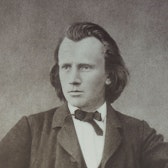
Johannes Brahms, the composer, was 43 years old when he completed his First Symphony in 1876, having previously struggled with the symphonic form.
Composition History
Brahms did not give his Hungarian Dances an opus number, telling his publisher Simrock, 'Forget about an opus number,' and describing them as 'real puszta and gypsy children - not begotten by me, but just raised on milk and bread'.
Composition History
Brahms's immensely popular Hungarian Dances for piano four-hands were based on suitable originals, some of which he noted down as early as 1854.
You might also enjoy...
Sibelius: Tapiola, En saga & Songs
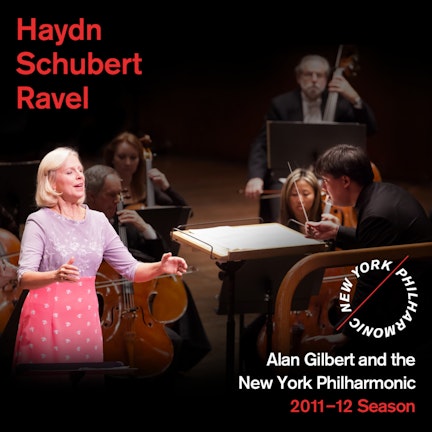
Haydn, Schubert, Ravel
Mahler: Fünf Lieder nach Friedrich Rückert / Vier Lieder aus "Des Knaben Wunderhorn"
Mahler: Des Knaben Wunderhorn - Lieder Eines Fahrenden Gestellen
THOMAS HAMPSON
Rimsky-Korsakov: Mozart and Salieri / Songs / Glinka: Songs