Brahms: Trios pour piano et cordes (Intégrale musique de chambre), Vol. 8
11/13/2020, 12 Tracks, 1:21:55
Featuring
Pierre Fouchenneret
François Salque
Éric Le Sage
Johannes Brahms
Did you know?
1/7
Composition History
Brahms's career as a trio composer is unique: he started early, abandoned the genre for over 25 years, then returned to it, even revising his first trio to become his last.
Cultural Impact
After Brahms's contributions, the piano trio genre seemed to decline, with later successes like Dvořák, Ravel, Fauré, and Shostakovich becoming rarer, highlighting the unique significance of Brahms's works.
Historical Context
A glowing article by Robert Schumann, a prominent German composer and critic, in 1853, hailed the young Brahms as 'the Chosen One,' creating immense pressure and making Brahms hesitant to publish his early works.
Composer's Artistic Vision
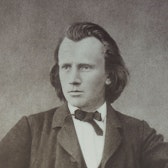
Johannes Brahms, the composer, cherished chamber music ensembles throughout his life, writing for them with legendary enthusiasm and ardour, blending classical rigour with Romantic impulse.
Instruments
Éric Le Sage, the pianist on this recording, played a Chris Maene Straight Strung Concert Grand Piano CM//284.
Recording & Production
This recording was made at La Ferme de Villefavard, a converted granary in rural Limousin, France, known for its exceptional acoustics designed by international acoustician Albert Yaying Xu.
Recording & Production
This album is part of a larger project to record all of Brahms's chamber music with the same group of musicians, a feat initially deemed impossible by some.
You might also enjoy...
Brahms: String Sextets Nos 1 & 2
Brahms: String Sextets Nos. 1 & 2
I protagonisti
Brahms: Chamber Quintets, Op.111 & 115
Juilliard Quartet, Vol. 3: Live at Library of Congress – Brahms Sextets