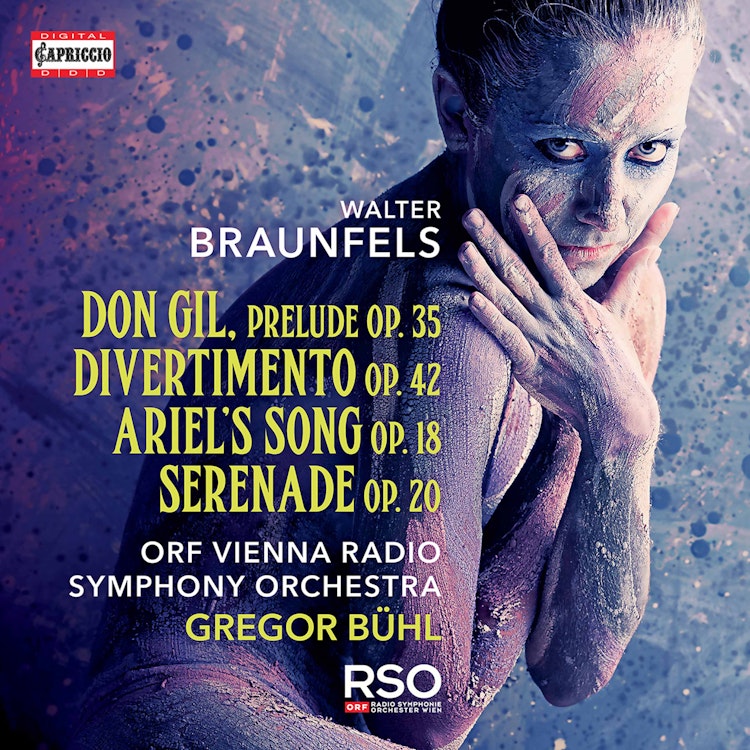
The Divertimento for Radio Orchestra, Op. 42, was considered lost until a set of handwritten parts was discovered in the basements of Universal Edition in Vienna a few years ago.
Composer Biography
As a child, Walter Braunfels impressed his classmate Hermann Abendroth, who would become a famous conductor, with his early compositions.
Composition History
Walter Braunfels' career in music was solidified after attending a moving performance of Tristan und Isolde conducted by Felix Mottl.
Composer Biography
Walter Braunfels' father, Ludwig, was a journalist and poet who created the standard German translation of Don Quixote.
Historical Context
Walter Braunfels' career was abruptly ended by the Nazis, partly because he was considered a 'Half-Jew' and also because he refused to write a party anthem for Adolf Hitler.
Critical Reception
After World War II, Braunfels' music, like that of many other tonal composers, was largely ignored by the musical establishment in favor of more radical, atonal styles.
Composer's Artistic Vision
Braunfels considered much of the music composed before World War I to be born out of a 'state of confusion' with an 'embarrassing discrepancy' between technical effort and emotional content.
You might also enjoy...
Spendiarov: Simphonic Works
Wagenaar: Summer of Life & Symphonic Poems
Radecke: Orchestral Works
Polish Symphonic Music of the 19th Century
Skrowaczewski: A Centennial Tribute
Grandi maestri dell'interpretazione: Bruno Maderna & Sergiu Celibidache (Live)
Prokofiev: Hail To Stalin / Autumnal Sketch / Hamlet / Flourish, Mighty Land / Egyptian Nights
Hely-Hutchinson: Carol Symphony / Standford / Kelly