In 19th-century European music, the symphony, overture, and symphonic poem often served quasi-literary functions, using the orchestra to tell stories, describe scenes, and evoke dramatic situations.
Performer Biography
Grzegorz Nowak, the conductor, won the First Prize and several other awards at the prestigious Ernest Ansermet Conducting Competition in Geneva in 1984.
Historical Context
Unlike other European countries, a strong Romantic symphonic tradition did not fully develop in 19th-century partitioned Poland, mainly due to a lack of permanent concert venues and independent symphony orchestras.
Historical Context
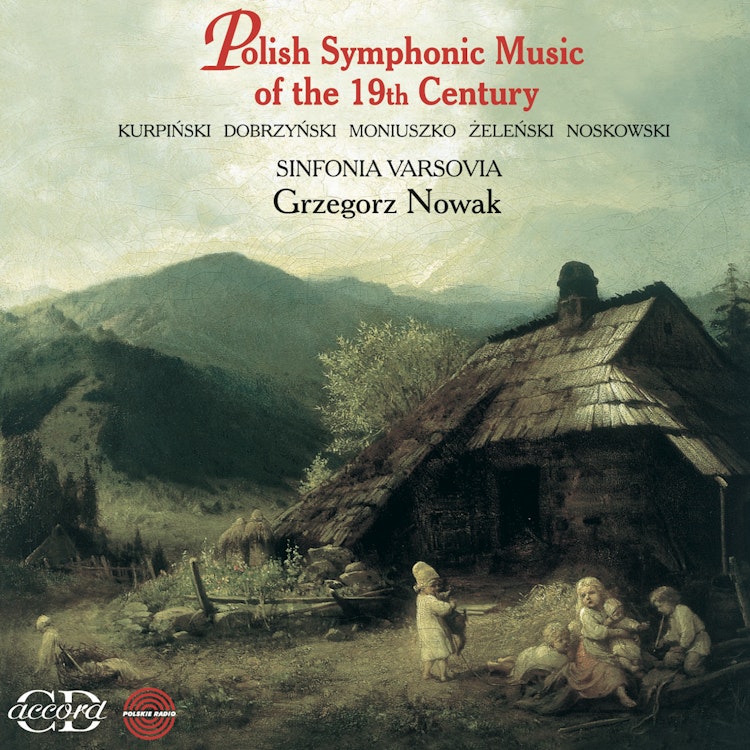
This album aims to show the evolution of Polish symphonic music from its classical and early romantic beginnings to the late romantic symphonic poem, challenging the belief that symphonic music did not exist in 19th-century Poland.
Composer's Artistic Vision
The composers featured on this album were skilled in orchestral writing, managing symphonic space, and balancing instrumental timbres, demonstrating a professional level comparable to other masters of symphonic composition.
Performer Biography
Sinfonia Varsovia was formed in 1984 when the Polish Chamber Orchestra expanded its ranks to accommodate a performance with Sir Yehudi Menuhin, who then became its permanent guest conductor.
Composer Biography
Karol Kurpiński (1785-1857) was not only a talented composer but also a significant organizer of musical life in Warsaw, a music theorist, critic, and pioneer of Polish music journalism.
You might also enjoy...
Ib Glindemann: Concertos
Klami, U.: Lemminkainen's Adventures On an Island / the Cobblers On the Heath / Karelian Rhapsody / A Karelian Market / In the Belly of Vipunen