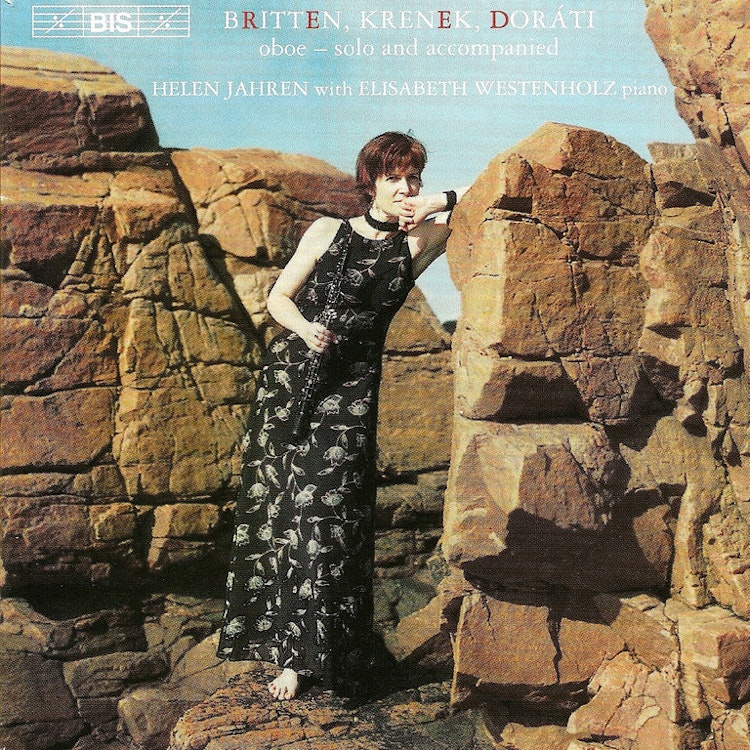
Britten: Temporal Variations / Dorati: 5 Pieces for Oboe / Krenek: 4 Pieces for Oboe
11/1/2005, 32 Tracks, 1:12:18
Featuring
Helén Jahren
Elisabeth Westenholz
Benjamin Britten
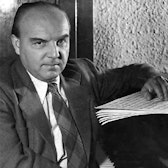
Antal Doráti
Ernst Krenek
Did you know?
1/7
Composer's Artistic Vision
Hector Berlioz, in his 1843 treatise on instrumentation, described the oboe's sound as suitable for expressing 'simplicity, artless grace, gentle happiness, or the grief of a weak soul.'
Instruments
A true oboe renaissance occurred in the early 20th century with the widespread adoption of the 'French oboe,' which featured a refined key mechanism developed by Triébert in the 1870s.
Composer Biography
Benjamin Britten's 'Temporal Variations' were withdrawn by the composer due to a disappointing premiere and were only published posthumously in 1980.
Composer Biography
Antal Doráti, highly respected as a conductor, remains largely unknown as a composer, despite a continuous output of compositions from the mid-1950s onwards.
Historical Context
By the early 18th century, the oboe had secured a permanent place in European music, both as a solo instrument and as an indispensable orchestral element.
Historical Context
Despite the oboe's early prominence, the rise of piano and violin virtuosos in the 19th century pushed all wind instruments from the podium for over a century.
Composition History
Britten's 'Six Metamorphoses after Ovid' was inspired by the technique and interpretative manner of specific instrumentalists, as inferred from their dedications.
You might also enjoy...
Canadian Scenes
Oboe Caprices on Giuseppe Verd - 19th Century Music for Oboe and Piano