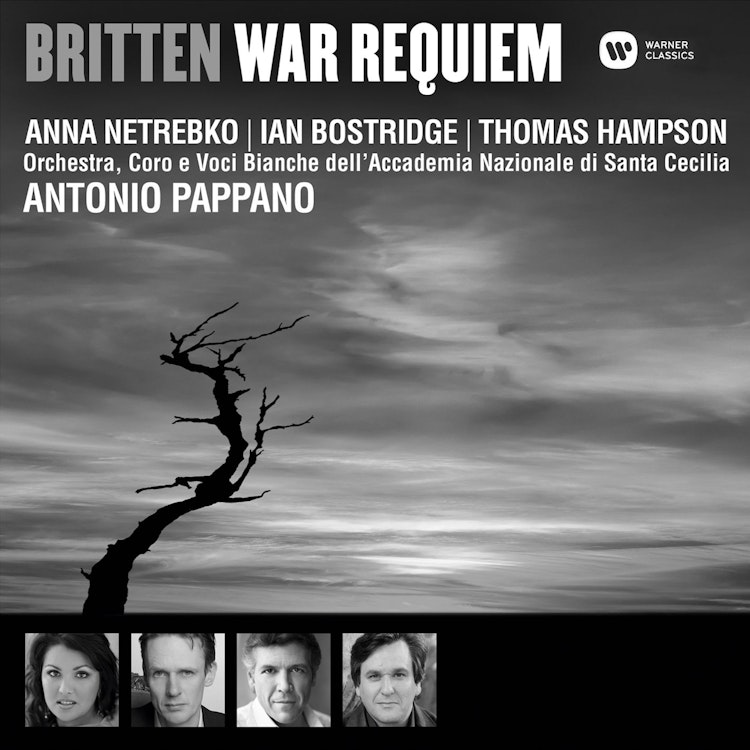
Orchestra dell'Accademia Nazionale di Santa Cecilia
Voci Bianche dell'Accademia Nazionale di Santa Cecilia
Coro dell'Accademia Nazionale di Santa Cecilia
Benjamin Britten
Did you know?
1/7
Composition History
Britten, a pacifist, had previously considered large-scale works in response to the atomic bombings of Hiroshima and Nagasaki, and to commemorate Gandhi, before deciding on the War Requiem.
Compositional Technique
The War Requiem employs three conductors due to the spatial separation of the main orchestra, mixed chorus, and soprano; the chamber group accompanying the tenor and baritone soloists; and the boys' chorus with chamber organ.
Critical Reception
The 1963 recording of the War Requiem sold over 250,000 copies in its first year, an unprecedented success for contemporary classical music, and was widely considered Britten's masterpiece.
Historical Context
Benjamin Britten's War Requiem was commissioned for the consecration of the new Coventry Cathedral, which was built after the original 15th-century church was largely destroyed by the Luftwaffe in 1940.
Composition History
The Coventry Cathedral Festival Committee gave Britten carte blanche for the commission, but initially expected his musical contribution to be provided pro bono.
Composition History
The role for the soprano soloist was originally intended for Galina Vishnevskaya, but the Russian authorities prevented her participation, leading to Heather Harper being drafted in with only ten days' notice.
Composer's Artistic Vision
Britten combined the traditional Latin Missa pro defunctis text with poems by Wilfred Owen, an English poet killed in World War I, to create a commentary on the Mass.
You might also enjoy...
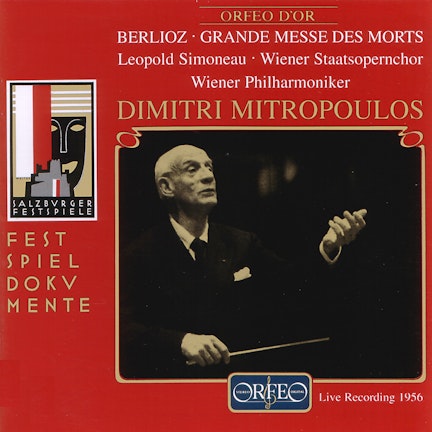
Berlioz Requiem
Britten: War Requiem
Mozart: Requiem Realisations
Mozart: Requiem - Paisiello: Messe pour le sacre de Napoléon