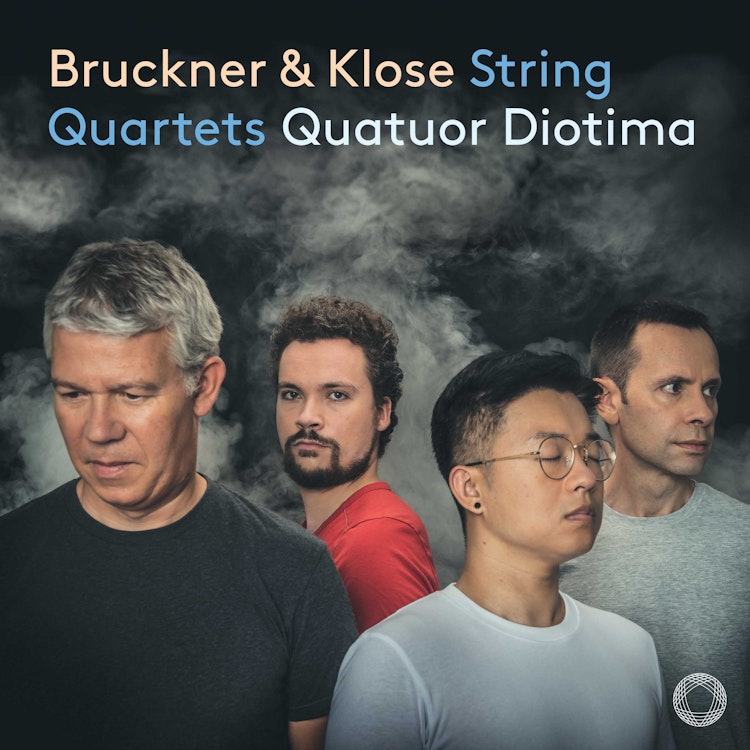
Anton Bruckner, already a well-known organist and composer, began formal studies in theory, instrumentation, and composition at age 37 with Otto Kitzler, who was ten years his junior.
Compositional Technique
Bruckner's String Quartet in C Minor, WAB 111, shows his impressive contrapuntal-polyphonic writing techniques, with bold modulations in the development section revealing original and independent features.
Composition History
Anton Bruckner's entire string quartet output dates from his study period with Otto Kitzler, preserved in the Kitzler-Studienbuch (study book) from 1861 to 1863.
Composition History
Bruckner's String Quartet in C Minor, WAB 111, was written for study purposes and never publicly performed by him, though he later fulfilled a request for a string quartet by composing his String Quintet in F Major.
Compositional Technique
The Scherzo of Bruckner's String Quartet in C Minor references Joseph Haydn's quartets, while its trio incorporates Ländler motifs, alluding to Upper-Austrian folk music.
Composer's Artistic Vision
Friedrich Klose, a student of Bruckner, subtitled his String Quartet in E-Flat Major 'A tribute paid in four instalments to my stern German schoolmasters,' demonstrating both classical influence and his own mastery.
Compositional Technique
Friedrich Klose's String Quartet in E-Flat Major features an Adagio with a chorale-like melody, which serves as a germ cell, with its motivic material recurring in changing forms throughout the other movements.
You might also enjoy...
Hindemith: String Quartets, Vol. 1
Tchaikovsky: String Quartets Nos. 1 & 3
Glazunov: String Quartets Vol. 4
Hindemith: String Quartets Nos. 1 and 5
Bloch: Paysages & Night
Walton: String Quartet in A Minor – Shostakovich: String Quartet No. 3 in F Major
Smyth: String Quartet - String Quintet
Bax: String Quartets Nos. 1 and 2
Janácek: The String Quartets
Bridge & Walton: String Quartets
Klughardt: String Quartet in F Major, Op. 42; Piano Quintet in G Minor, Op. 43
Janácek: String Quartets
Leo Ornstein: Piano Quintet & String Quartet No. 2
Hindemith: String Quartets, Vol. 3
Mendelssohn, Felix: String Quartet No. 2 / Grieg, E.: String Quartet in G Minor