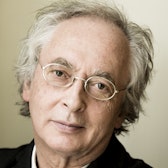
Philippe Herreweghe, the conductor, believes Bruckner's music, like Schubert's, is profoundly melancholic and mourns a "paradise lost."
Composition History
The Mass No.2 was originally scored without strings, organ, or solo quartet due to its premiere at an open-air consecration ceremony.
Critical Reception
The premiere of the final version of the Te Deum was so successful that even Eduard Hanslick, a consistent detractor of Bruckner's music, expressed admiration.
Composition History
Bruckner's Mass No.2 in E Minor was commissioned by Bishop Franz-Josef Rudigier of Linz for the consecration of the votive chapel of the New Cathedral.
Compositional Technique
Musicologist Leopold Nowak noted that Bruckner's Mass No.2 combines the a cappella choral technique of Palestrina's time with instrumental coloring from the Viennese Classical School.
Composition History
Bruckner composed the Te Deum while also finalizing his Sixth Symphony and during the composition of his Seventh Symphony, sharing thematic elements with the latter.
Compositional Technique
The Te Deum features an opening figure built on a four-note cell that underpins the entire composition, which musicologist Leopold Nowak called "one of the Master's most prodigious inventions."
You might also enjoy...
Bruckner: Mass No. 3 in F Minor & Psalm 150
Bruckner: The Masses
Schubert: Mass in E-Flat Major, D. 950
Schubert: Mass No. 5 - Magnificat
Schubert : Masses No.5 in A flat major D678 & No.6 in E flat major D950
Schubert: Messe G-Dur - Gounod: Cäcilienmesse
Missa D 678; Deutsche Messe D 872
Janacek: Glagolitic Mass / Kodaly: Psalmus Hungaricus
Schubert: Masses
Schubert: 3 Masses - Tantum Ergo - Offertorium
Weber, C.M. von: Missa sancta No. 2, "Jubelmesse" / Schumann, R.: Missa sacra, Op. 147