A 1749 Papal Encyclical attempted to ban instruments like timpani, horns, and flutes from church music, deeming them too 'operatic'.
Compositional Technique
Schubert later added trumpets and timpani to his Mass in G major, enhancing the 'glow and dramatic intensity of the middle movements'.
Composer's Artistic Vision
Charles Gounod, influenced by romantic Catholicism, shared E.T.A. Hoffmann's view that Palestrina's 16th-century unaccompanied choral music represented an ideal of 'religiosity'.
Performer Biography
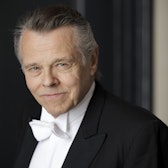
Mariss Jansons, the conductor, was awarded a Grammy in 2006 for 'Best Orchestral Performance' for his recording of Shostakovich's 13th Symphony with the Bavarian Radio Symphony Orchestra.
Composition History
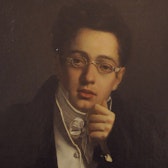
Franz Schubert's Mass in G major was initially scored modestly for strings, as was typical for a Missa brevis performed at a normal Sunday service.
Compositional Technique
Gounod's St. Cecilia Mass originally featured a lush instrumentation, including six harps, to immerse the acoustic space in a 'mystically shimmering to powerfully glowing light'.
Critical Reception
Camille Saint-Saëns reported that at the premiere of Gounod's St. Cecilia Mass, the audience was 'at first dazzled, then intoxicated and finally overwhelmed'.
You might also enjoy...
Janacek: Glagolitic Mass / Kodaly: Psalmus Hungaricus
Schubert : Masses No.5 in A flat major D678 & No.6 in E flat major D950