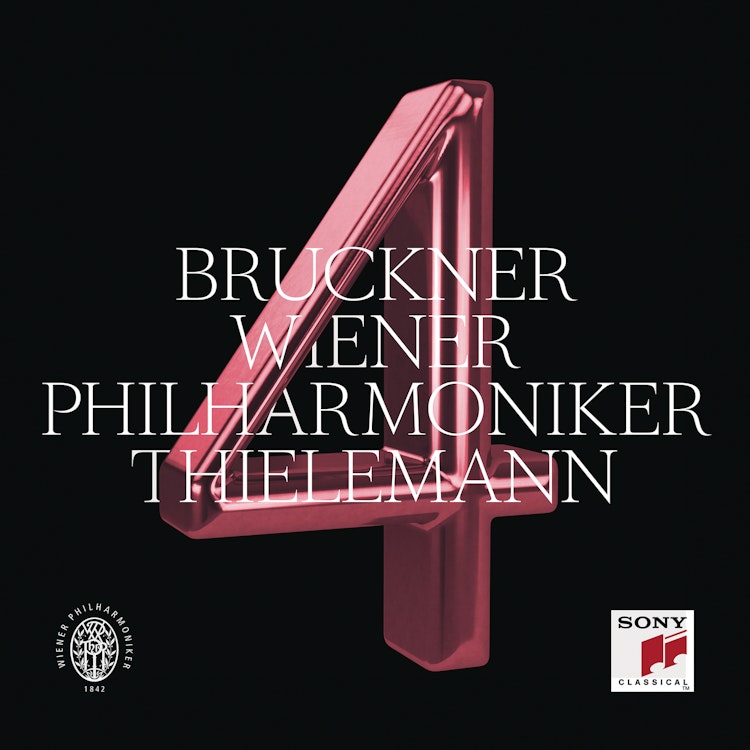
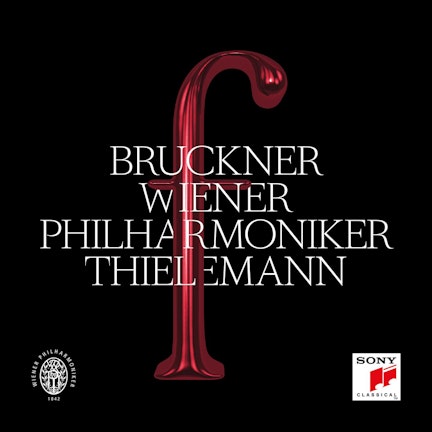
Bruckner: Symphony No.4 in E-flat Major, WAB 104 (Edition Haas)
10/8/2021, 4 Tracks, 1:09:44
Gramophone Editor's Choice
Featuring
Christian Thielemann
Wiener Philharmoniker
Anton Bruckner
Did you know?
1/7
Composer's Artistic Vision
Bruckner defined Romanticism as 'religious and mysterious,' identifying it with Wagner's Lohengrin, and insisted it should remain 'free from all that is impure.'
Compositional Technique
Bruckner radically revised his Fourth Symphony, reproaching himself for 'unplayable & over-difficult violin figures' and an instrumentation that was 'too overladen & too restless in places,' as well as being 'contrapuntally overblown.'
Critical Reception
The Fourth Symphony was popularly known as the 'Forest Symphony' or 'Symphony of Nature' due to listeners' imaginative associations with German Romanticism.
Composition History
Bruckner's Fourth Symphony, known as the 'Romantic,' was composed in 1874, but he continued to rewrite and revise it over the next fifteen years.
Interpretation
Conductor Christian Thielemann advises against defining Bruckner's orchestra by its 'fissures and cracks and angularities,' instead suggesting it should sound like a 'large organ with lots of stops.'
Composer's Artistic Vision
Bruckner himself provided programmatic explanations for parts of his Fourth Symphony, describing the first movement as a horn summoning the day and the second as a song, prayer, and serenade.
Performer Biography
The Fourth Symphony was the first Bruckner symphony Christian Thielemann conducted, but he admitted he 'failed to pull it off' in his early twenties, finding it harder than he imagined.
You might also enjoy...
Bruckner: Symphony No. 6 in A Major, WAB 106
Bruckner: Symphony No. 4
Bruckner, A.: Symphony No. 5
Bruckner: Symphony No. 4, 'Romantic'
Bruckner: Symphony No. 1 in C Minor, WAB 101 (Vienna Version)
Bruckner, A.: Symphony No. 8
Bruckner: Symphony No. 4 in E-Flat Major, WAB 104 "Romantic"
Anton Bruckner: Symphony No. 9 in D minor. With Finale (Version by Samale et al.)
Bruckner: Symphony No. 4 in E Flat Major
Bruckner: Symphony in F Minor, WAB 99 ("Nullified" First Symphony, also called "Study Symphony")