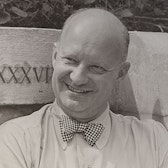
Hindemith's conducting ethos was greatly influenced by Wilhelm Furtwängler, whom he considered a 'representative figure of German music' for his 'ineffable integrity'.
Interpretation
As a conductor, Hindemith was a pragmatist who aimed for flawless results and valued a compact, tangible unfolding of strength over subtle nuances.
Recording & Production
This recording of Bruckner's Symphony No. 7 was made in a radio studio production in Stuttgart-Degerloch on June 24, 1958, and has been digitally remastered from the original SWR tapes.
Performer Biography
Hindemith began conducting more intensively after World War II, when he stopped performing as a viola virtuoso, finding it a good way to present his own works and earn additional income.
Performer Biography
Hindemith regularly conducted major orchestras worldwide, including the Berlin and Vienna Philharmonics, the Concertgebouw Orchestra, and the London, Chicago, and New York Symphony Orchestras.
Performer Biography
Hindemith, the conductor, had a professional command of nearly all orchestral instruments, which aided his composing and conducting.
Performer Biography
Paul Hindemith, the conductor of this album, was an excellent violinist in his youth and became known as the leading German viola virtuoso.
You might also enjoy...
LP Pure, Vol. 25: Klemperer Conducts Bruckner
Schubert: Symphony No. 4 in C Minor, D. 417 "Tragic"