Bruckner, the son and grandson of humble village schoolmasters, was brought up in the Roman Catholic tradition, and his faith was sincere and unquestioning.
Composer's Artistic Vision
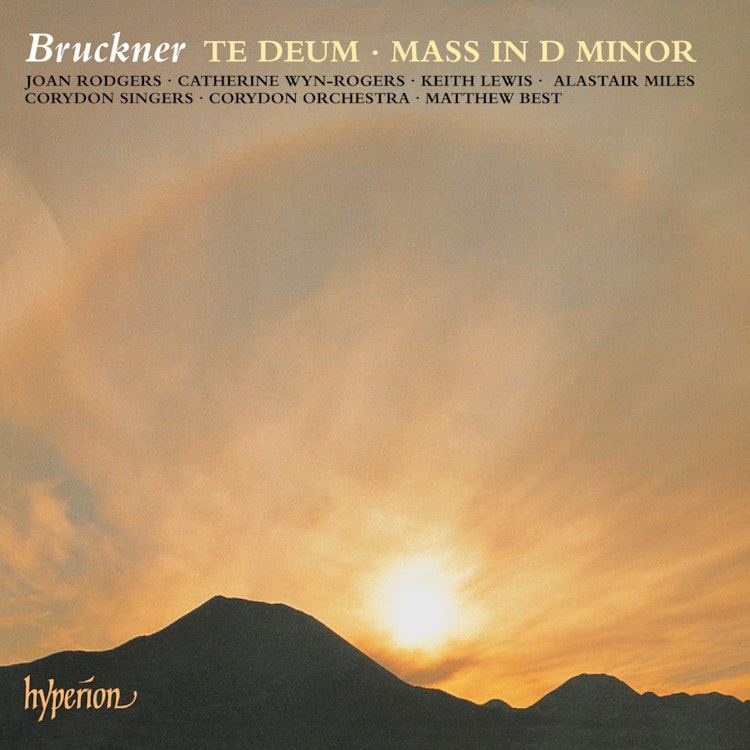
Bruckner once stated that he would present the score of his Te Deum to God as an account of his talent, hoping for merciful judgment.
Composer Biography
Bruckner's self-doubt, especially in his earlier years, was legendary, often leading him to revise his symphonies substantially after criticism or suggestions.
Recording & Production
The versions of the Mass and Te Deum used for this recording are those edited by Nowak, dating from 1957 and 1962 respectively.
Composer Biography
Bruckner only showed the first real signs of artistic maturity at age forty, when he wrote the D minor Mass, attributing his delayed individuality to the influence of Wagner's music.
Composer's Artistic Vision
Bruckner's music is powerfully characterized by its religious mysticism, deeply ingrained in both his sacred choral works and symphonies.
Compositional Technique
Bruckner learned the cyclic principle, where the final Agnus Dei recalls material from earlier movements, from Haydn and Mozart.
You might also enjoy...
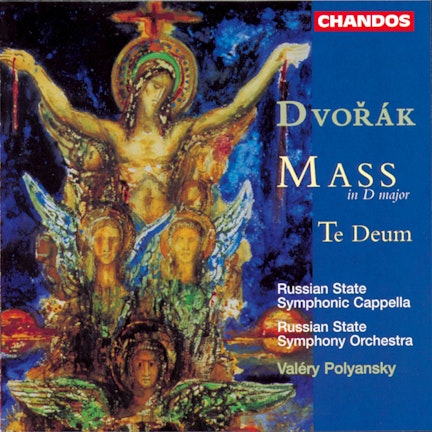
Dvorak: Mass in D Major / Te Deum
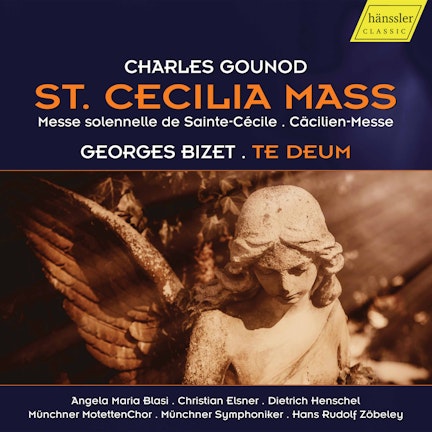
Gounod: St. Cecilia Mass / Bizet: Te Deum
Anton Bruckner: Mass No. 2 (1882 version) / Te Deum [1884 version] [Berlin Radio Chorus and Symphony Orchestra, Rogner]
Gounod: St. Cecilia Mass, CG 56 - Bizet: Te Deum, WD 122 (Live)
Haydn : Choral Works
Haydn: Missa "Sunt bona mixta malis" & Missa brevis and More
Haydn Edition Volume 5 - Masses, Stabat Mater, Seven Last Words
Haydn: Mass in D Minor, Hob.XXII:11 "Nelsonmesse" - Bach: Magnificat in D Major, BWV 243
Haydn : Mass No.11 in D minor, 'Missa in angustiis' [Nelson Mass] & Te Deum
Haydn: Harmony Mass, Te Deum
Mozart, W.A.: Dixit and Magnificat / Missa Brevis / Sancta Maria, Mater Dei