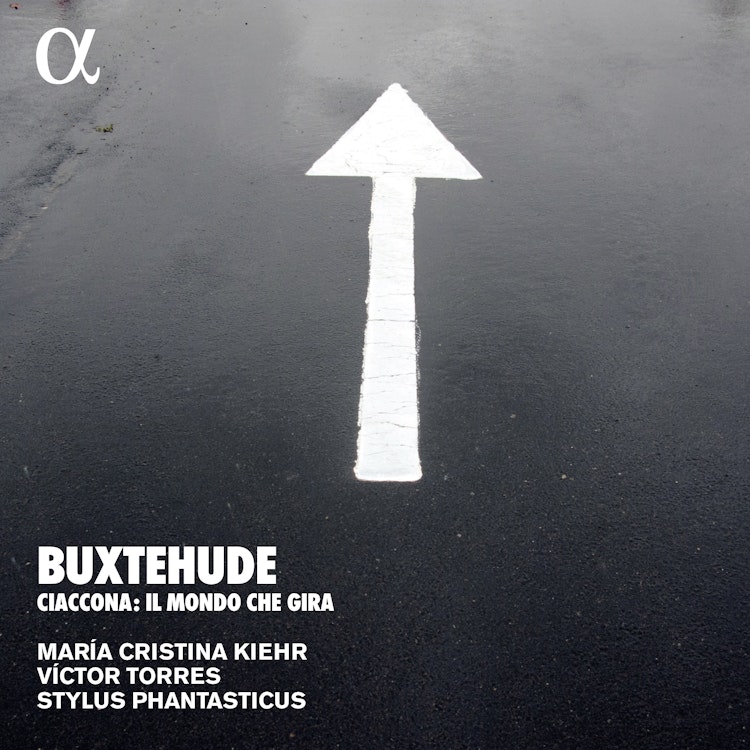
Buxtehude: Ciaccona Il mondo che gira (Alpha Collection)
4/14/2003, 15 Tracks, 1:00:55
Featuring
María Cristina Kiehr
Victor Torres
Stylus Phantasticus
Dietrich Buxtehude
Did you know?
1/6
Historical Context
The 17th century saw the general acceptance of the solar system model, with Galileo asserting the Earth's rotation and Kepler calculating planetary trajectories, alongside Harvey's discovery of blood circulation.
Compositional Technique
Buxtehude's chamber music sonatas, though varied in structure and style, often alternate between slow and fast tempos and include fugal movements, ostinato pieces, gigues, and sarabandes.
Instruments
The harpsichord used in this recording is an Italian model by Gian Franco Facchini from 1995, and the organ is a 1996 G. & H. Klop instrument, modeled after the 1610 Compenius organ in Frederiksborg Castle.
Composer's Artistic Vision
For Dietrich Buxtehude, a highly cultivated humanist, works based on an ostinato were a means of commenting on a specific conception of the world.
Compositional Technique
The technique of building a constantly varied work over an obstinately repeated bass line, known as ostinato, is very old, dating back to a 14th-century English canon.
Composer Biography
Buxtehude published two collections of trio sonatas around 1692 and 1696, and other sonatas survive in manuscripts collected by his Swedish friend, Gustav Düben.
You might also enjoy...
Handel 'Oxford' Water Music
Handel: Trios, Sonatas And Concerti For Diverse Instruments
Couperin: Apotheoses
Telemann: Banquet Music in three Parts
The Young Vivaldi
Telemann: Tafelmusik
Ciaccona!
Bach, J.S.: Duo and Trio Sonatas - Bwv 1021, 1023, 1027A, 1028, 1029