Buxtehude's compositional style was influenced by the rich musical traditions of the Baltic region, Hanseatic cities, England, the Netherlands, central Germany, Italy, and France.
Composer Biography
In 1668, Buxtehude was appointed organist of the Marienkirche in Lübeck, considered one of the most important church music posts in north Germany.
Composition History
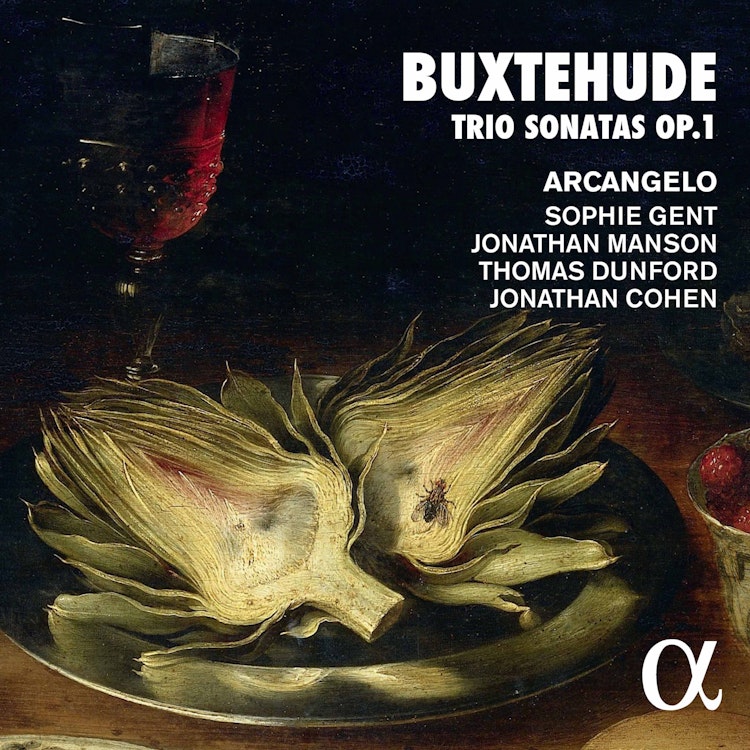
These Trio Sonatas are from Buxtehude's first collection, published in 1694 as Opus 1, and were linked to Hamburg for their typesetting and musical inspirations.
Composer Biography
Dietrich Buxtehude, born around 1637, was the son of an organist and spent his early years in Oldesloe, Holstein, then under Danish rule.
Compositional Technique
Buxtehude's sonatas feature pronounced experimental characteristics, using two obbligato parts for instruments with clearly distinct timbres to achieve individualization and unique sonic mixtures.
Compositional Technique
The instruments in Buxtehude's sonatas are treated as absolutely equivalent, despite their different tonal palettes and playing techniques, creating striking effects when virtuoso figures are passed between them.
Composition History
Buxtehude organized 'Abendmusiken' (evening concerts) outside the liturgical framework, held on the five Sundays before Christmas, a tradition started by his predecessor Franz Tunder.
You might also enjoy...
Rameau: Pièces de clavecin en concerts
Mascitti: Sonate a Tre - Opera Prima
Mannelli: Trio Sonatas, Op. 3
Telemann: 6 Trios
Rameau: Pieces de clavecin en concerts
Jean-Philippe Rameau: Pièces De Clavecin En Concerts