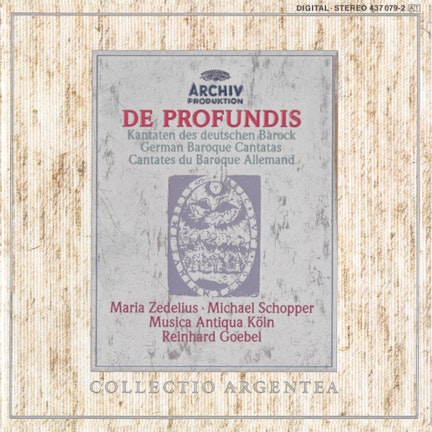
Dietrich Buxtehude, a world-famous musician, lived and worked in Lübeck for about 40 years, significantly contributing to its reputation as 'the capital of music'.
Performer Biography
The Bach Collegium Japan (BCJ), directed by Masaaki Suzuki, was founded in 1990 to introduce Japanese audiences to Baroque works on period instruments, focusing on J.S. Bach and his predecessors.
Recording & Production
This CD was recorded in the Shoin Women's University Chapel, built in 1981 with special attention to creating an exceptional acoustic, including an average resonance of 3.8 seconds.
Compositional Technique
Membra Jesu nostri is a cycle of seven cantatas, each meditating on one of the seven members of Jesus's body on the cross (feet, knees, hands, side, breast, heart, and head).
Compositional Technique
The words for Membra Jesu nostri are in Latin, which was unusual for a Buxtehude cantata, and are taken from the Latin Bible (Vulgate) and a work attributed to St Bernard of Clairvaux.
Composer Biography
Buxtehude held three main roles in Lübeck: church organist, 'Werkmeister' (treasurer and general business manager for the church), and director of the 'Abendmusiken' (annual concert series).
Composition History
Buxtehude dedicated his definitive work, Membra Jesu nostri, to Gustaf Düben the elder, a Stockholm musician and court Kapellmeister who preserved many of Buxtehude's sacred compositions.
You might also enjoy...
Buxtehude: Membra Jesu nostri, BuxWV 75
Dieterich Buxtehude: Membra Jesu Nostri, BuxWV 75 (1680)
Buxtehude: Membra Jesu nostri
Abendmusik
Graupner: Bassoon Cantatas
Buxtehude: 6 Cantatas
Death & Devotion - Weckman, Tunder, Buxtehude & Ritter