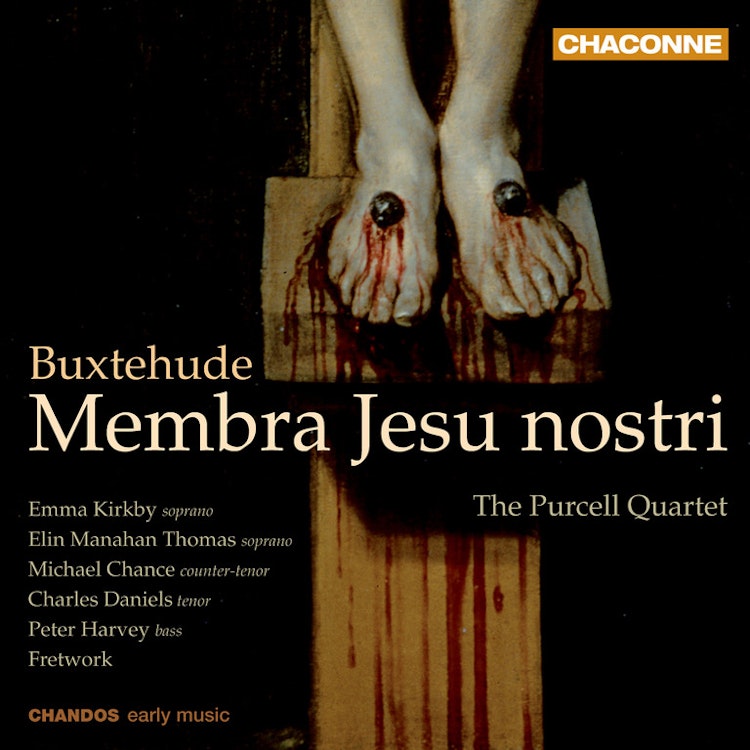
Buxtehude's 'Membra Jesu nostri' is dated 1680 and dedicated to Gustav Düben, director of music at the Swedish court, suggesting it may have been commissioned for performance there.
Compositional Technique
The keys chosen for the cantatas in 'Membra Jesu nostri' progress from flats to sharps as the poet's gaze rises, from C minor to E minor, before returning to the opening key for a closed cycle.
Composer's Artistic Vision
The text for 'Membra Jesu nostri' is based on the medieval poem 'Salve mundi salutare', a seven-part meditation on the crucified body of Jesus, traditionally attributed to Bernard of Clairvaux.
Composer Biography
Dietrich Buxtehude, born around 1637, was the son of an organist and served as organist in his father's churches before moving to Lübeck in 1668.
Performer Biography
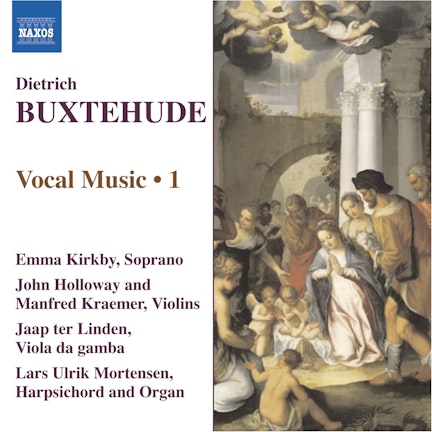
Emma Kirkby, a soprano on this recording, was voted Classic FM's artist of the year in 1999 and was appointed a Dame Commander of the Order of the British Empire in 2007.
Compositional Technique
Buxtehude's 'Membra Jesu nostri' uses a broadly symmetrical musical structure where Biblical passages for the full ensemble frame arias for reduced vocal forces, interspersed with instrumental ritornelli.
Composition History
Buxtehude developed the annual 'Abendmusiken' concert series in Lübeck, which towards the end of his life included extended oratorio-like works, potentially providing a venue for 'Membra Jesu nostri'.
You might also enjoy...
Buxtehude: Cantatas and Motets
Buxtehude: Membra Jesu Nostri
Dieterich Buxtehude: Membra Jesu Nostri, BuxWV 75 (1680)