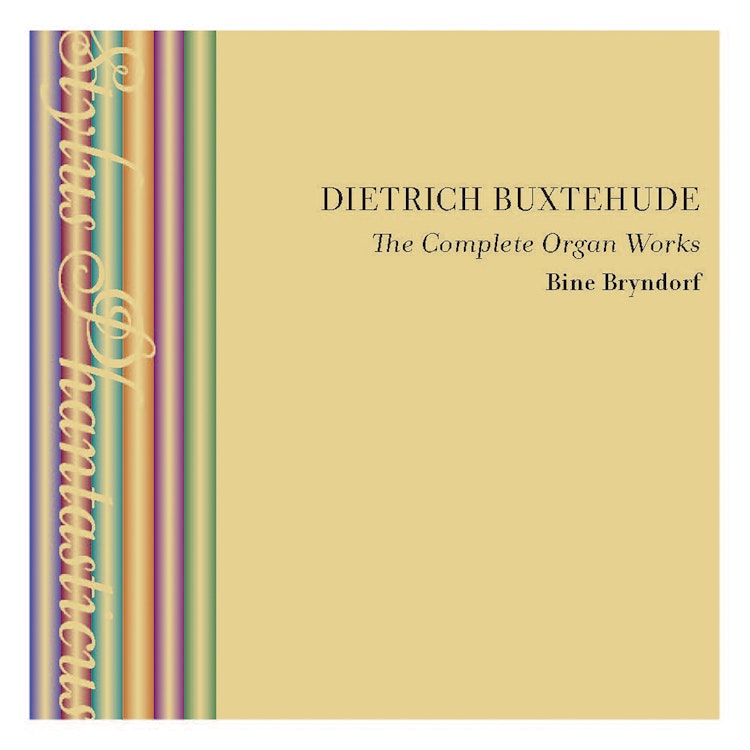
Buxtehude held the prestigious and well-paying position of organist and Werkmeister (administrator and treasurer) at St. Mary's, Lübeck, making him the most highly paid musician in the city.
Recording & Production
This complete organ works series was recorded across six different churches in Denmark, Sweden, and Germany, utilizing various historic organs.
Composer's Artistic Vision
Buxtehude's personality was multifaceted, encompassing roles as a composer, keyboard player, conductor, accountant, and poet, with a deep Christian piety alongside a worldly enjoyment of life.
Compositional Technique
Buxtehude's free organ works, such as praeludia, praeambula, or toccatas, combine various styles and textures, from free keyboard idioms to structured fugues, a hallmark of the 'stylus phantasticus'.
Compositional Technique
Buxtehude was likely the first to require pedals in ciaconas or passacaglias, allowing the hands to play complex variations while the repeating ostinato melody is carried by the pedal.
Composer Biography
Dieterich Buxtehude, the composer, was likely born in 1637 in Helsingborg, Denmark, and grew up bilingual, aware of both his German heritage and Danish surroundings.
Instruments
The 'Düben organ' in St. Gertrud, Stockholm, used for Volume 4, is a reconstruction of a 1609 organ, tuned in a ¼ comma meantone system, which has perfect major thirds but limits playable keys.
You might also enjoy...
Splendour & Fantasy: The North German Organ Tradition
Mit Bach durchs Jahr – Vol. 4 (Ostern)
St. Mark's Cathedral, Seattle: Thomsen Chapel Inaugural Recitals
Orgelkonzert in der Christuskirche Bremerhaven
Scheidemann: Orgelwerke
Mit Bach durchs Jahr – Vol. 5 (Pfingsten)
Pachelbel, J.: Organ Music (Complete), Vol. 7
Bach: Neumeister Chorales (Complete Organ Works 11)