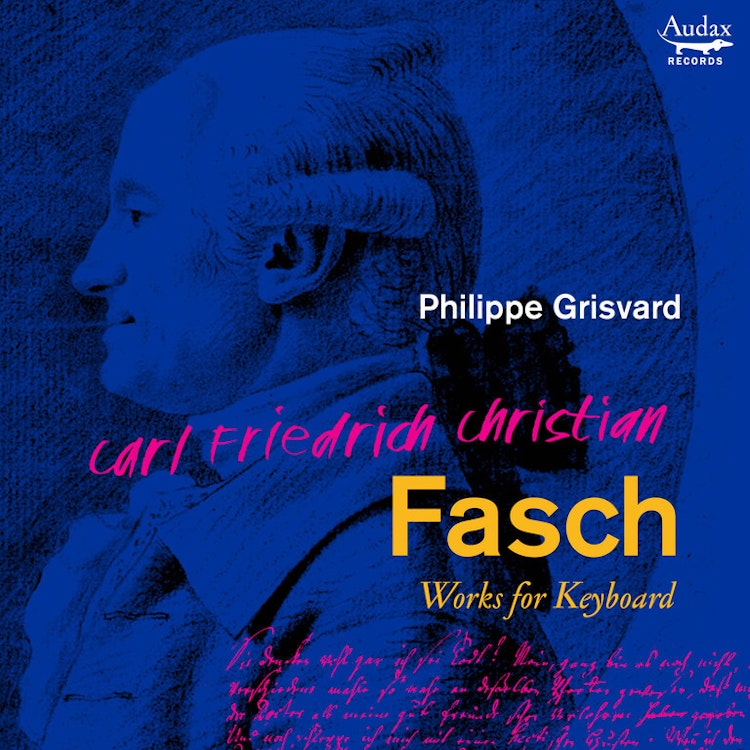
Carl Friedrich Christian Fasch, the composer on this album, was initially destined to follow his father, Johann Friedrich Fasch, as Kapellmeister at the court of Anhalt-Zerbst.
Compositional Technique
Fasch's 'La Socrates' may refer to Moses Mendelssohn, a key Enlightenment figure known as the 'German Socrates,' rather than Plato's teacher.
Instruments
The fortepiano used for this recording is attributed to Johann André Stein, made in Augsburg around 1790, and is part of the Neumeyer-Junghanns-Tracey Collection in Bad Krozingen.
Composer's Artistic Vision
Fasch, a highly self-critical composer, intentionally destroyed many of his own compositions, which contributed to his works being largely forgotten by musicians and audiences.
Composer Biography
Fasch shared the position of harpsichordist at the Prussian court with Carl Philipp Emanuel Bach, rotating every four weeks for nearly ten years.
Composition History
Fasch founded the Berliner Singakademie in 1791, an institution that later became famous for Felix Mendelssohn's revival of Bach's St. Matthew Passion in 1829.
Performer Biography
Philippe Grisvard, the fortepiano performer, studied harpsichord and basso continuo at the Schola Cantorum Basilensis with Jesper B. Christensen and fortepiano with Edoardo Torbianelli.
You might also enjoy...
Pollini: Capriccio, Sonate, Variazioni e Toccata
Hoffman: Complete Sonatas for Fortepiano
Evoke
Opera Arias (Arr. for Flute, Oboe and Piano) - Delibes, L. / Puccini, G. / Offenbach, J. / Gounod, C.-F. / Mozart, W.A.
Hindemith: Wind Sonatas
20th Century Music for Saxophone & Piano
Biddington: Last Notes
Beethoven: Early Wind Music
Rita Strohl: Volume 2, Musique de chambre
Flute and Piano Music By Composers of African Descent. Vol. 2